Warehouse floor repairs put damaged concrete back into safe, working condition so forklifts, pallet trucks and people can move around without hazards, and without the cost of a new floor. Contact Flooring carries out warehouse concrete floor repairs for distribution centres, storage buildings, factories and production areas across the UK. We assess what has failed and why, repair it with materials suited to the traffic the floor carries, and plan the work around your operation.
Industrial floors take constant punishment. Hard wheels, racking impacts, building movement, temperature changes and spills all wear the surface down, and damage that starts small can quickly escalate into a safety problem and costly downtime.
Warehouse floor repair: the damage we deal with
Most concrete warehouse floor repair work falls into a few familiar categories. A survey will usually find more than one of them in the same building.
- Cracks. Caused by building movement, shrinkage, heavy loads or temperature changes. Left untreated they spread and widen, and the edges begin to break away under wheels.
- Spalling. The top layer of concrete flakes or breaks off, typically under repeated impact, leaving a rough, uneven surface that keeps deteriorating.
- Potholes and holes. Spalled areas and broken patches that have been run over for long enough become holes that jolt trucks, damage wheels and loads, and create trip hazards.
- Failed joints and broken arrises. The edges of saw-cut and expansion joints chip away under hard wheels until the joint becomes a trench. See our concrete slab joint repair service for more detail.
- Worn coatings. Resin coatings wear through along traffic routes, or peel and lift where they were laid without proper mechanical preparation.
- Racking and forklift damage. Impact around racking legs, at loading doors and on turning areas where forklifts load the floor hardest.
How we repair warehouse concrete floors
No two warehouse floors are alike. They may have been laid using different methods and materials, so every job starts with an assessment and a repair plan for that floor. The methods we use include:
- Epoxy resin injection to fill cracks and restore integrity to the slab.
- Concrete repair mortars, resin or cementitious, to rebuild spalled areas, holes and broken surfaces.
- Cut and patch repairs for larger damaged areas: the affected section is cut out and replaced.
- Joint repair with a flexible resin that absorbs impact and movement and seals the joint against debris, moisture and chemicals.
- Grinding to remove high spots, lips and ridges and leave a flatter surface. Read more about warehouse floor grinding.
- Coating over repairs where the whole area needs a new wearing surface, such as a high build epoxy coating.
The repair process
- Site survey. We inspect the floor, record the defects and look for the cause, such as a heavy traffic route, a failing joint or a coating laid over unprepared concrete.
- Preparation. Damaged areas are cut out, rough surfaces are ground back and the area is vacuumed clean so repair materials bond to sound concrete. Thorough preparation is the part of any floor repair that should never be rushed.
- Repair. Repair mortars and epoxy resin are installed to suit the defect. Materials are selected for strength and, where needed, a quick cure.
- Curing and handover. Many repairs are cured and ready for traffic within around 12 hours, so an area repaired at the end of one day can often be back in use the next. Cure times depend on the material, the depth of repair and site temperature, and we confirm them at survey.
Working around your operations
We know that a warehouse floor cannot simply be closed for a week. Repairs can be:
- carried out in zones, with areas taped off while the rest of the building keeps working;
- scheduled over weekends, evenings or planned shutdowns;
- phased aisle by aisle so racking does not all need emptying at once.
Agreeing access, traffic routes and handover times is part of the survey, so your team knows exactly which areas are out of use and when they come back.
Repair or a new floor?
Repair is the right choice when the slab is basically sound and the damage is local: individual cracks, joints, holes and impact areas. It is quicker, less disruptive and costs less than replacement.
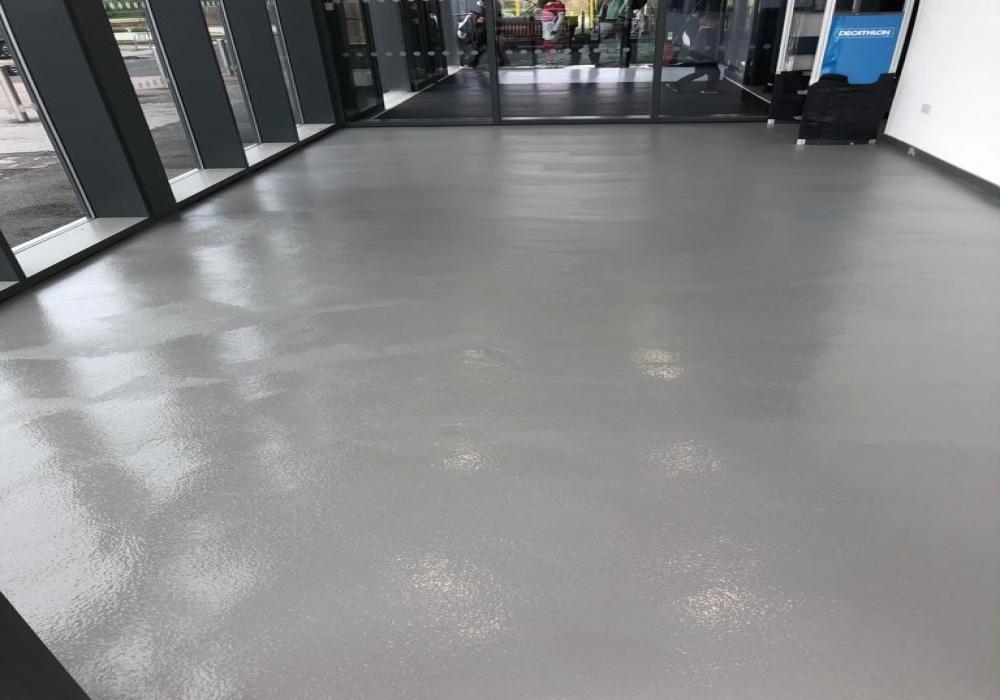
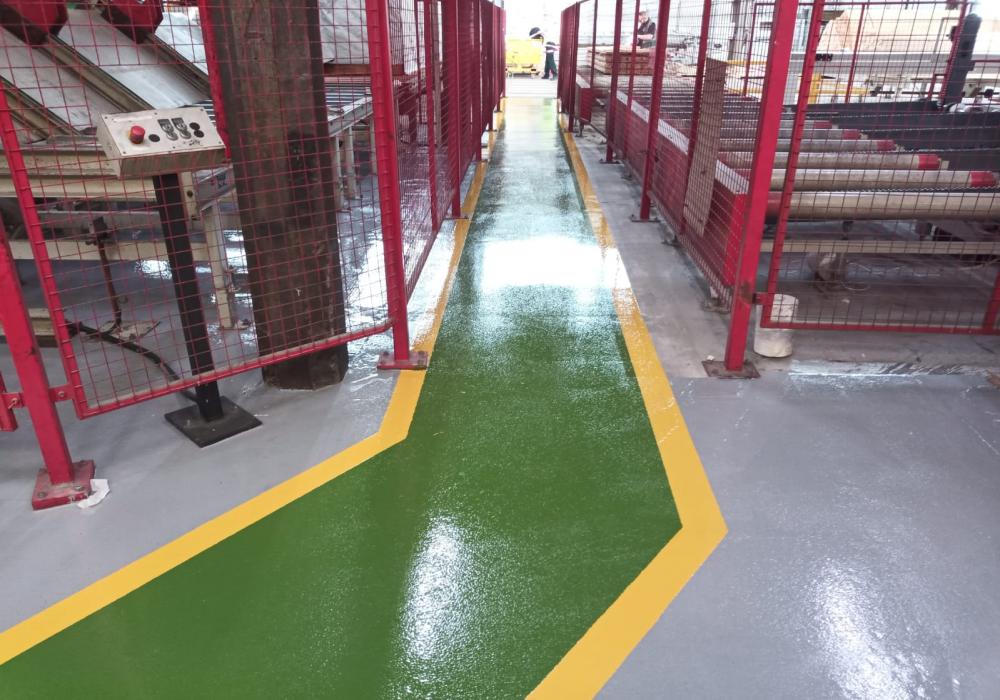
When damage is widespread, or an existing coating is failing across the floor, it usually makes more sense to repair the substrate and then install a new resin system over the whole area. That might be a hard-wearing epoxy coating, a polyurethane screed for heavier impact and chemical exposure, or new line marking and demarcation once the surface is restored. A survey will tell you which route gives the better value for your floor.
Case studies
Warehouse floor repair for an international car parts manufacturer, Oxford
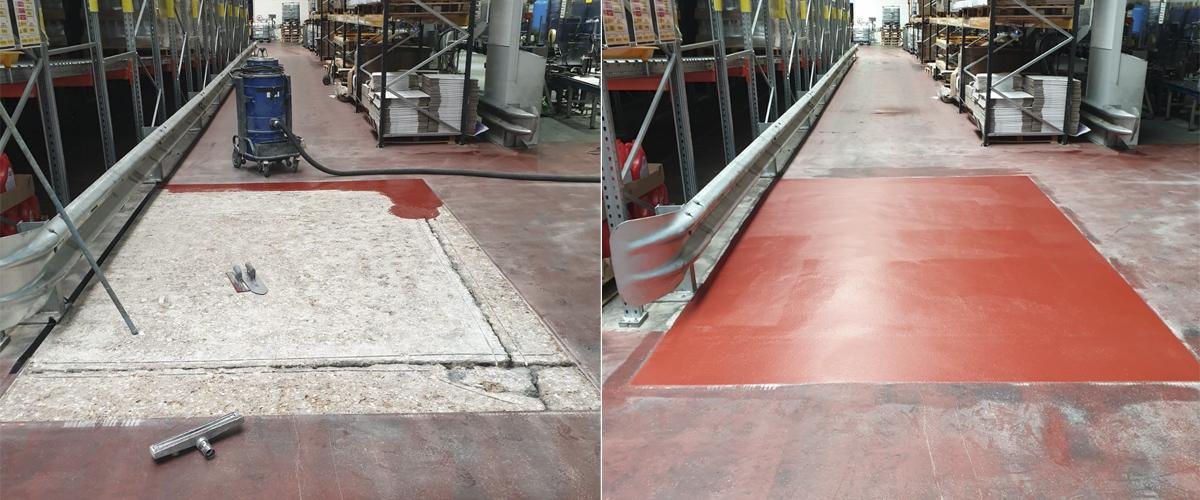
This client contacted us for an urgent repair due to a health and safety requirement. The work was carried out over a weekend using an epoxy based repair mortar. After taping off the area, we heavily ground out and removed all of the damage, leaving the middle of the area almost 40mm deep. We installed a scratch coat heavily filled with silica sand, followed by a high build coating to leave a usable, fit for purpose area. Read the Oxford warehouse floor repair case study.
Existing warehouse dilapidations, Birmingham, 2021m2
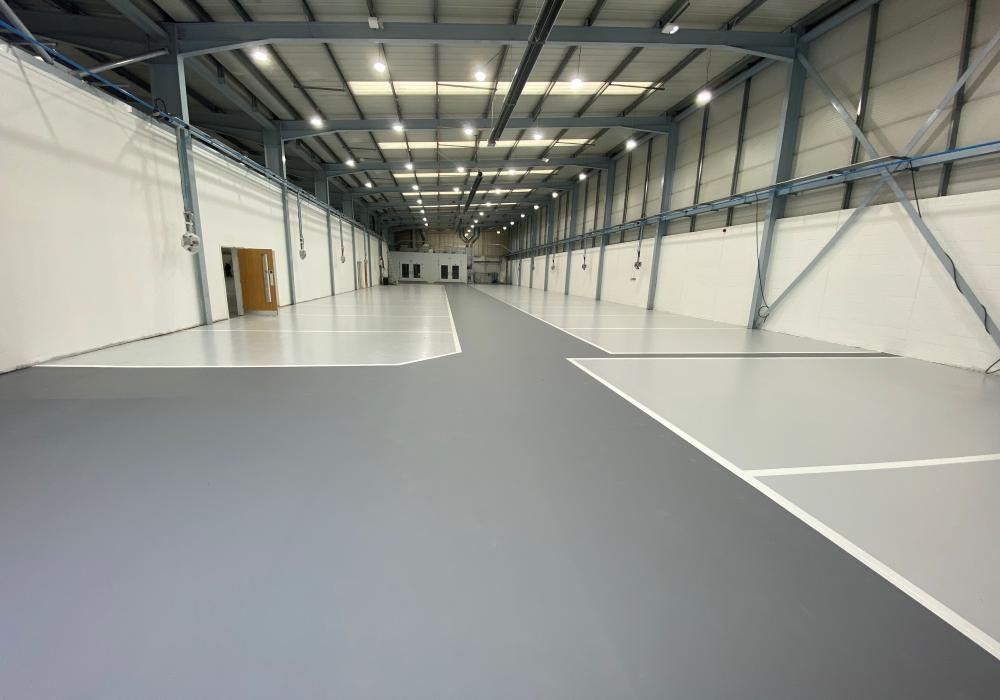
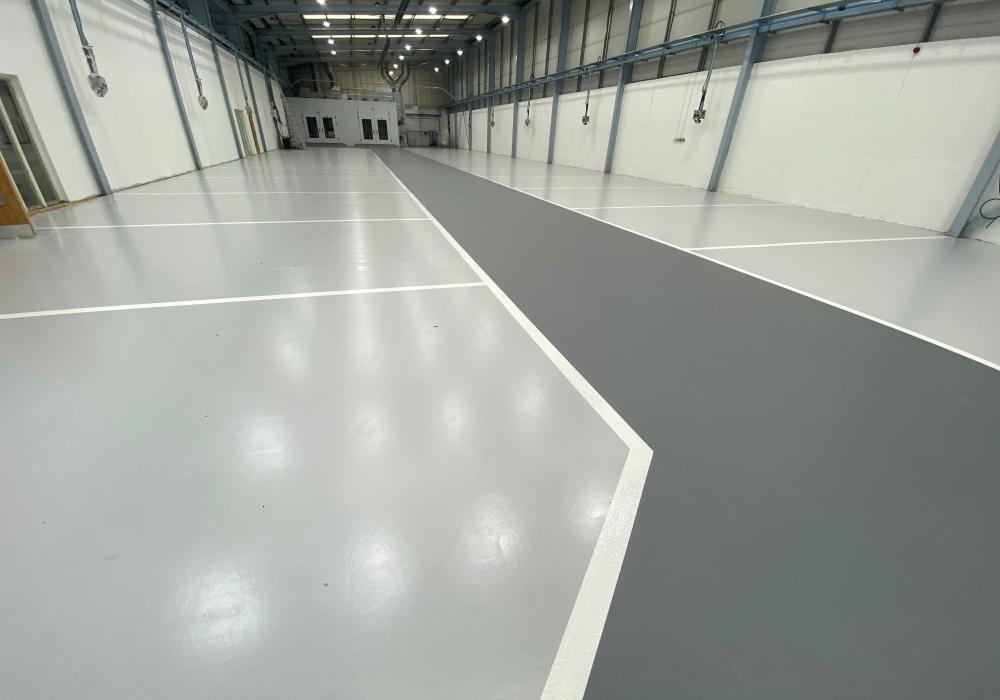
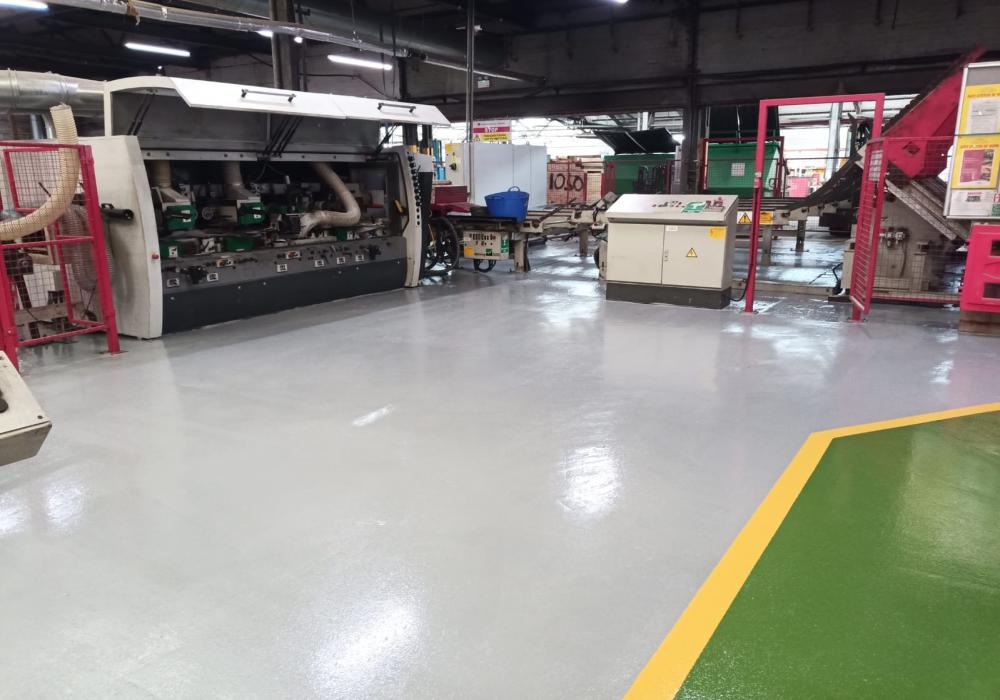
Working for a dilapidations contractor on behalf of a landlord, we found a poor epoxy coating laid with little or no mechanical preparation and no repairs to the concrete beneath. After agreeing the approach on site, we removed the coating and mechanically prepared the floor to expose the substrate. We then carried out the essential repairs and levelled undulations with resin repair mortars and mixed resin systems. Once these had cured overnight and been sanded with an STR grit pad sanding machine, we applied a squeegee-applied, solvent free epoxy coating thicker than normal to fill imperfections, then a roller-applied, solvent free epoxy high build finish and a small walkway. Read the Birmingham 2021m2 dilapidations case study.
Warehouse floor repair near me
We work nationwide across England, Scotland and Wales from our head office in Hyde, Greater Manchester, and our Midlands office. Whether your site is next door or the other end of the country, the survey, planning and repair process is the same. Our floor repairs hub lists our local repair pages for Manchester, Birmingham, London, Leeds, Cardiff, Glasgow and Edinburgh.
Common questions
How long does a warehouse floor repair take to cure?
Many repair mortars and epoxy repairs can take traffic after around 12 hours. The exact time depends on the material, the depth of repair and the temperature on site, and we confirm it before work starts.
Can you repair the floor while the warehouse is operating?
Usually, yes. We work in taped-off zones, or schedule the work for weekends or shutdowns, so the rest of the building stays in use.
What causes concrete warehouse floors to break up at the joints?
Hard wheels from forklifts and pallet trucks hitting the joint edges, combined with slab movement, gradually chip away the arrises. Once a joint opens up, damage tends to speed up, so early repair is worthwhile.
Is it worth repairing an old warehouse floor before re-coating it?
Yes. A new coating laid over cracks, holes and unprepared concrete will show the defects and is likely to fail early. Repairs and mechanical preparation come first.
Arrange a warehouse floor survey
To arrange a site survey for warehouse or industrial floor repairs, call 0161 726 5095, request a quote or contact us.