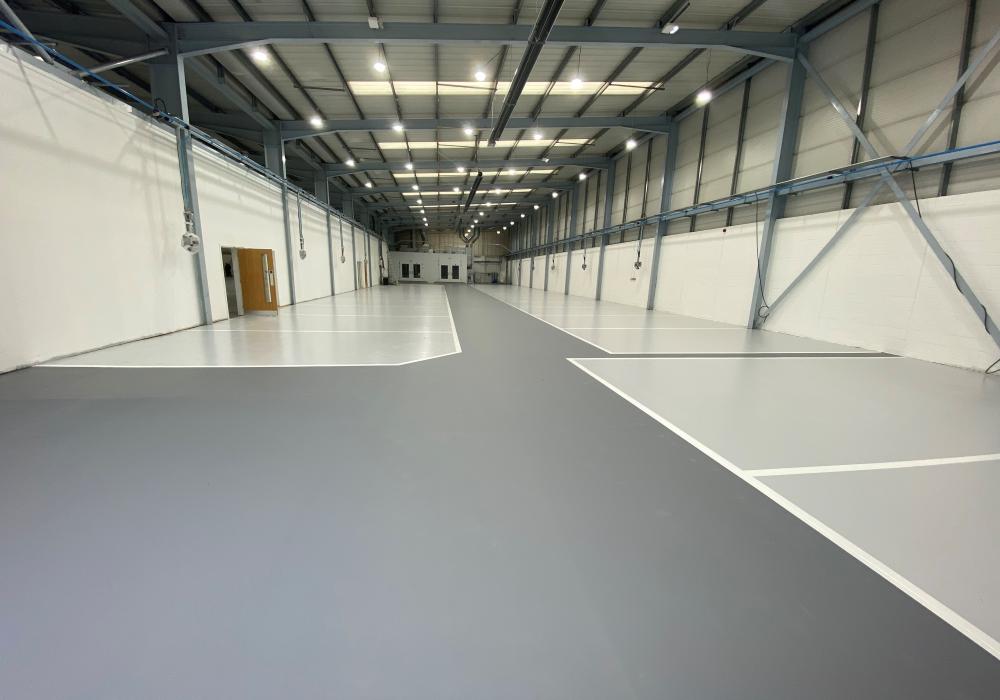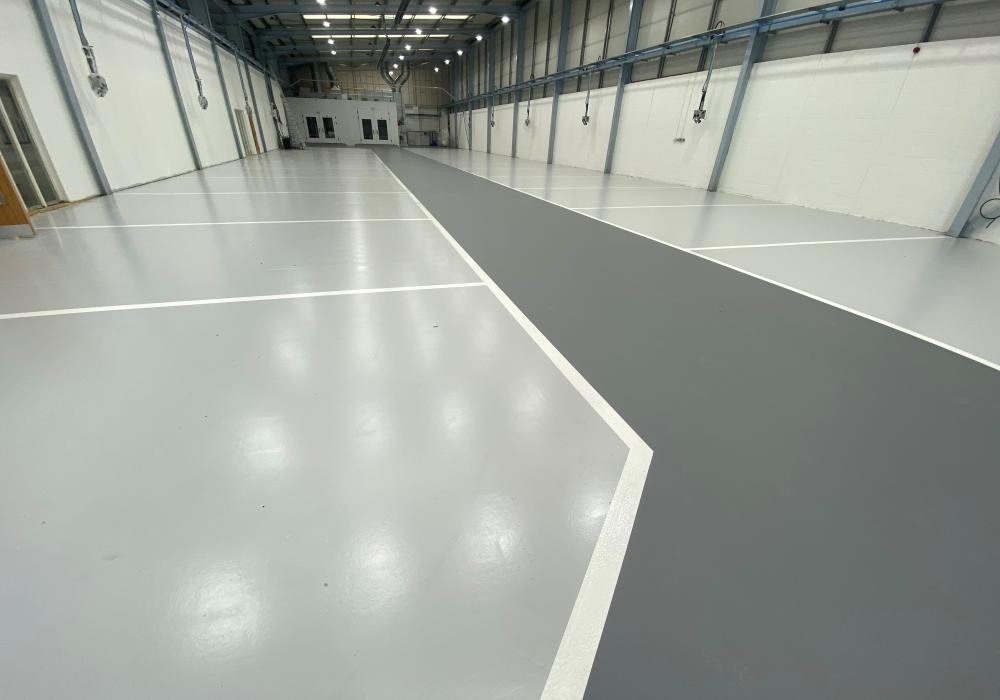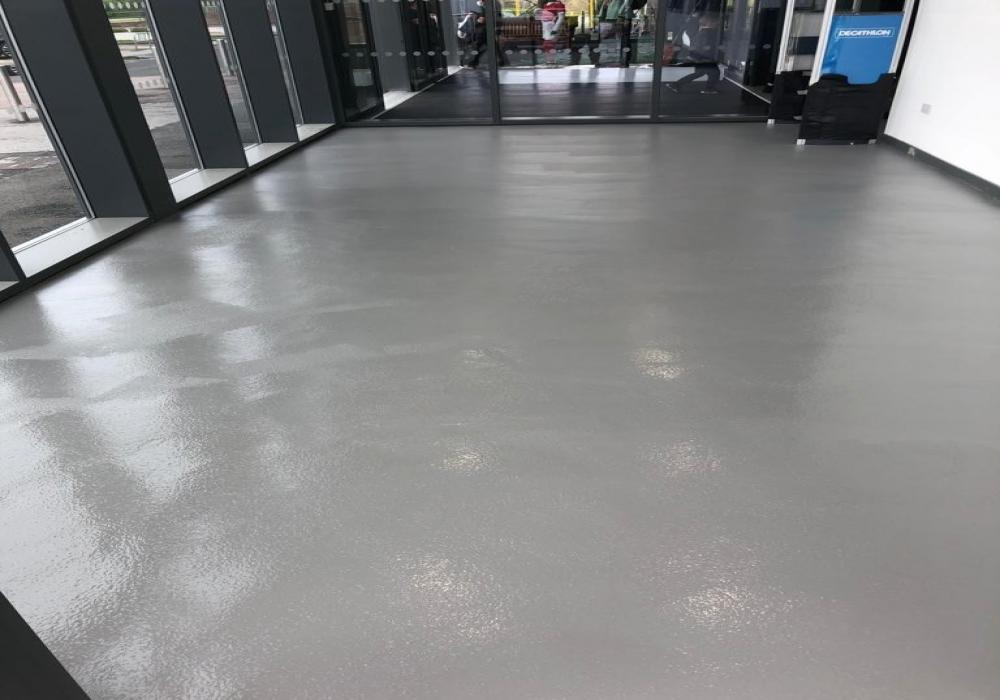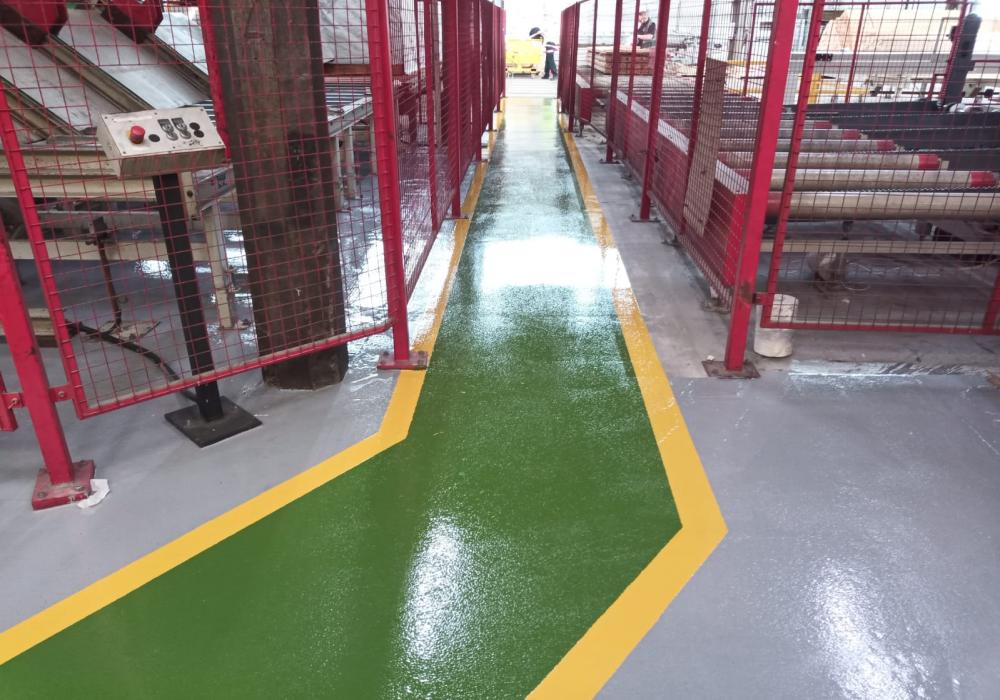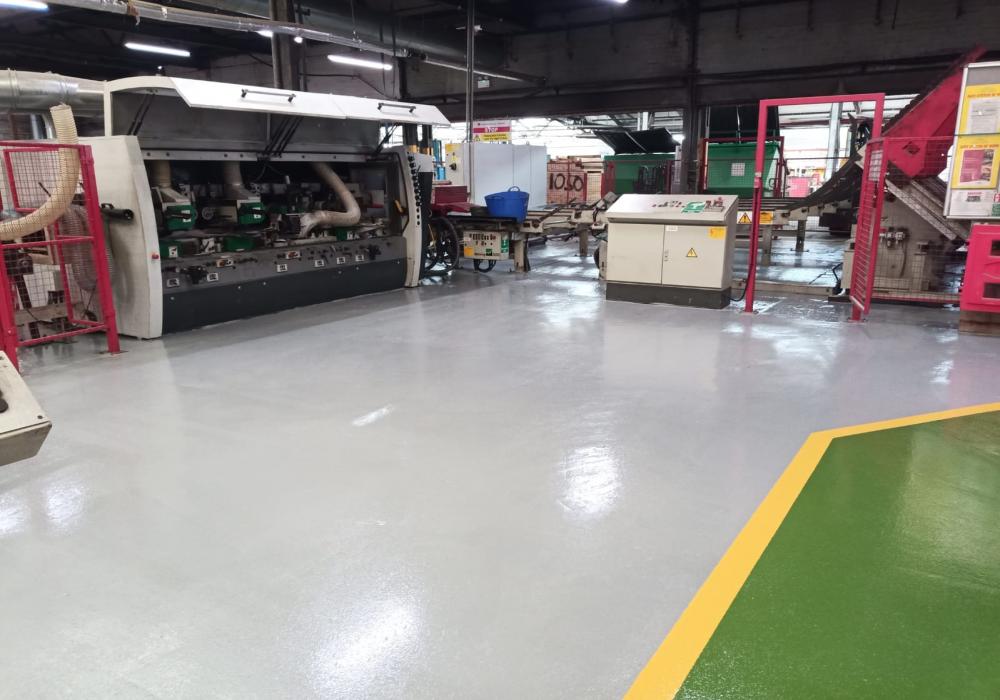

A resin floor sealer is the lightest resin treatment we apply to concrete. It is a coloured polyurethane floor sealant and dustproofer, applied in two or more coats to a total dry film thickness of about 150 microns, with a gloss or silk finish. As a concrete floor sealer it stops dusting, makes the floor easier to sweep and adds colour, and it can also act as a strengthening binder for old and porous concrete. It falls under BS8204 Part 6 Synthetic Resin Flooring Type 1.
What a concrete floor sealer does
Bare concrete slowly breaks down at the surface under foot and wheel traffic, releasing fine dust that settles on stock, racking and machinery. A seal coat soaks into the top of the slab and forms a thin film that binds that surface together. The floor stops dusting, spills sit on the surface long enough to be wiped up, and a coloured finish brightens the space.
Seals are generally solvent or water borne, which helps them penetrate the concrete. On older, dusty slabs this penetration is the main benefit: the seal reinforces the weak surface layer rather than simply sitting on top of it.
Where a resin floor sealer is a good fit
- stores, archive rooms and stock rooms with mainly foot traffic
- plant rooms and service areas
- garages and light workshops
- older dusty slabs that need dustproofing on a limited budget
- short-term improvements before a lease ends or a building is refitted
Where you need more than a seal
A seal is a maintenance-level treatment, not a hard wearing floor. Our specification gives an anticipated life of 1-2 years in light to medium duty use, so it will need recoating periodically. If the floor carries pallet trucks or regular forklift traffic, or you want a longer interval between treatments, an epoxy floor coating (up to 300 microns) or a high build floor coating (up to 1000 microns) will last considerably longer. A seal also cannot fill cracks or level an uneven slab: damaged concrete needs concrete floor repairs first.
System specification
| Feature | Description |
|---|---|
| Application | Applied in 2 or more coats |
| Intended use | Light to medium use |
| Thickness | Up to 150 microns |
| UV resistance | A variety of versions available |
| Slip resistance | Aggregate can be added to achieve a slip resistant finish |
| Anticipated Life | Light/ medium duty use 1-2 years. |
How a floor seal is applied
- Inspection: we check for old coatings, oil, curing compounds and moisture, any of which can stop a seal from soaking in.
- Preparation: the surface is mechanically prepared to remove laitance and contamination and open the pores of the concrete. See our page on preparation for resin flooring.
- Cleaning: dust from preparation is removed by vacuum.
- First coat: applied so it penetrates and binds the surface.
- Second and further coats: build the film and give the final colour and sheen.
Because a seal is thin and quick to apply, it is well suited to working in sections around stored goods or occupied areas.
Colours, sheen and slip resistance
Floor seals are coloured and come in gloss or silk finishes. UV resistance varies by grade, and a variety of versions are available for areas exposed to daylight. Where the floor may be wet or dusty, an aggregate can be added to achieve a slip resistant finish.
Looking after a sealed floor
A sealed floor is easier to keep clean than bare concrete, but it is a thin film and will wear first in traffic routes and turning areas. Regular cleaning and a planned recoat before the film wears through keep the concrete protected. Our warehouse floor cleaning and maintenance service can help with this.
Common questions
What is the difference between a floor sealer and a floor coating?
Thickness and durability. A seal is up to 150 microns and suited to light to medium use; coatings are thicker and last longer under traffic.
Will sealing concrete stop it dusting?
Yes, that is its main purpose. The seal binds the weak surface layer of the concrete and acts as a dustproofer.
How often does a sealed floor need recoating?
Our specification gives an anticipated life of 1-2 years in light to medium duty use, depending on traffic.
Can a floor seal be anti-slip?
Yes. Aggregate can be added to achieve a slip resistant finish.
Ask about sealing your floor
If your floor needs more than a seal, see our warehouse resin flooring and factory resin flooring pages. Call 0161 726 5095 or request a quote.