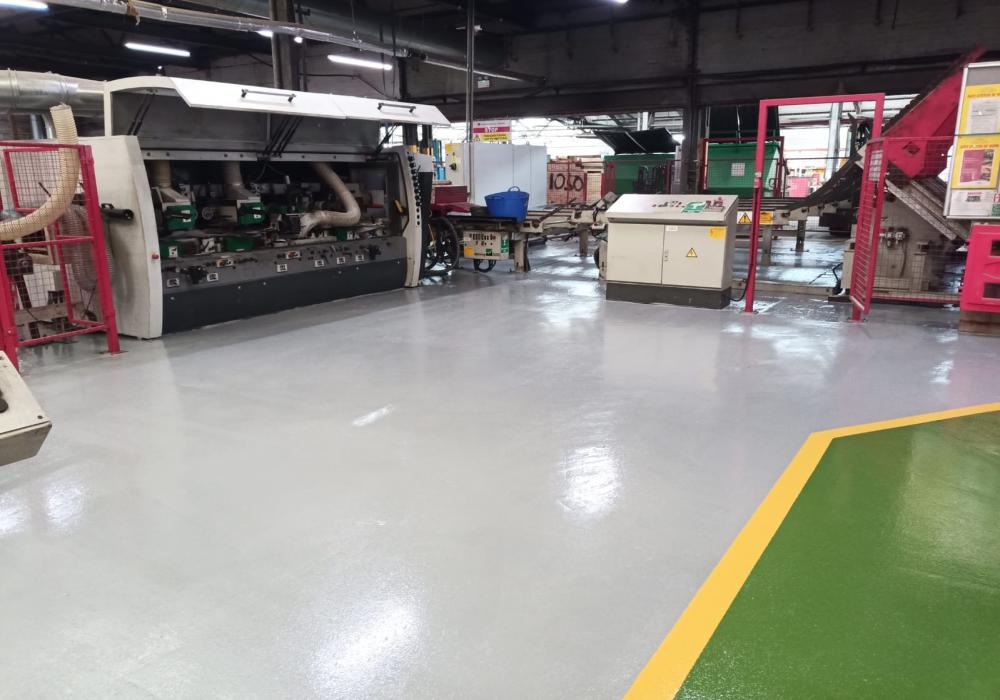
Factory flooring has to do more than carry traffic. Production floors take oil and coolant spills, cleaning chemicals, hot and wet processes, dropped tools and forklift routes, often all in the same building. Contact Flooring installs factory resin flooring for manufacturers across the UK, with over 20 years' experience preparing and coating industrial slabs and offices in the North West and the Midlands.
Below we set out how we match a system to each production area, how we install around shutdowns and how we finish the job with demarcation.
Industrial resin flooring for production areas
Industrial resin flooring is a family of systems rather than one product. They range from thin epoxy and polyurethane coatings to thick trowelled screeds, and the right choice depends on what happens on the floor. During the site survey we look at:
- Traffic: foot traffic, trolleys, pallet trucks or forklifts, and where they turn and brake.
- Contamination: oils, fuels, coolants, solvents, acids or alkalis, and how long spills sit before cleaning.
- Water and temperature: wet processes, washdowns and hot spills.
- Slip risk: where the floor is wet or oily during normal work.
- Hygiene: whether the area needs to be cleaned to a food or pharmaceutical standard.
- The slab: its condition, moisture, joints and any old coatings.
Chemical and oil exposure
Bare concrete soaks up oil and is attacked by many process chemicals. Resin floors seal the surface so spills can be cleaned off, and thicker systems give more protection for longer. As our system specifications show, coatings give some resistance to chemical spillage, while flowable floors and PU screeds give very good resistance.
At an oil and fluids manufacturer in Wolverhampton, where we had already installed over 3000m2 of 6mm polyurethane screed, the last 692m2 had years of oil contamination and old finishes. We spent two days grinding, made minor repairs, applied an oil tolerant primer and chased the floor edges with diamond blades so the screed would grip, then laid a 6mm PU screed over three days. A heavier 1-2mm aggregate was added at the roller shutter door for forklift grip in wet conditions (Wolverhampton 6mm PU screed project).
Thermal shock and wet processes
Hot water washdowns, steam cleaning and hot spills can make a floor expand and contract quickly. Thin coatings are not designed for this and can lose bond over time. Where an area is regularly hot and wet, a polyurethane screed is typically the better choice, laid with a suitable seal coat and falls to drainage where needed. Chemical plants and process areas are covered in more detail on our chemical resin flooring page.
Slip resistance
Slip resistance comes from the texture of the finish. In coatings, a fine aggregate is broadcast into a coat and sealed in; in screeds and heavy duty trowelled floors the texture is part of the system. More texture gives more grip but takes more cleaning, so we agree the balance with you for each area: smoother where hygiene matters most, more textured at doorways, ramps and wet processes.
Hygiene in food, drink and pharmaceutical production
Seamless resin floors leave no grout lines or open joints to hold dirt. In food and drink factories they can be laid with coving at the wall junction so floors can be cleaned right up to the wall. See our pages on food and drink resin flooring and pharmaceutical resin flooring for sector requirements.
Choosing between coatings, self-smoothing, PU screed and heavy duty systems
Epoxy and polyurethane coatings
Epoxy floor coatings and high build coatings suit assembly, storage and light production areas with foot traffic and pallet trucks. They are the most economical option and can be colour-coded by area. These manufacturing floor coatings were the right answer at a new industrial fluid manufacturing facility in the West Midlands, where a previous coating had been laid without mechanical preparation and was already failing. We shot blasted three times to remove it, repaired joints and damage, laid a thick high build epoxy by squeegee and back roller, and finished with a UV stable, highly chemical resistant polyurethane coat in matt across 540m2 (West Midlands fluid manufacturing case study).
Flow applied (self-smoothing) floors
Self-smoothing resin floors give a smooth, easily cleaned surface for clean production, electronics assembly, packing and pharmaceutical areas. They are not the best choice where oil or water sits on the floor, unless a slip-resistant aggregate is added.
PU screeds
Polyurethane screed is the workhorse for heavy production: impact, chemicals, hot and wet processes and forklift traffic. At a Ducati workshop in Stoke we laid a 9mm PU screed over 60m2 after strength testing a filled inspection pit and building up floor levels at roller shutter and fire doors with repair mortars. The client first asked for a high gloss finish, but oil, grime and daily impact called for a fit for purpose system instead (Stoke workshop project).
Heavy duty trowelled floors
For the hardest areas, such as engineering shops with steel components, heavy turning traffic and aggressive chemicals, heavy duty resin flooring at 6-9mm is specified.
Factory resin flooring by sector
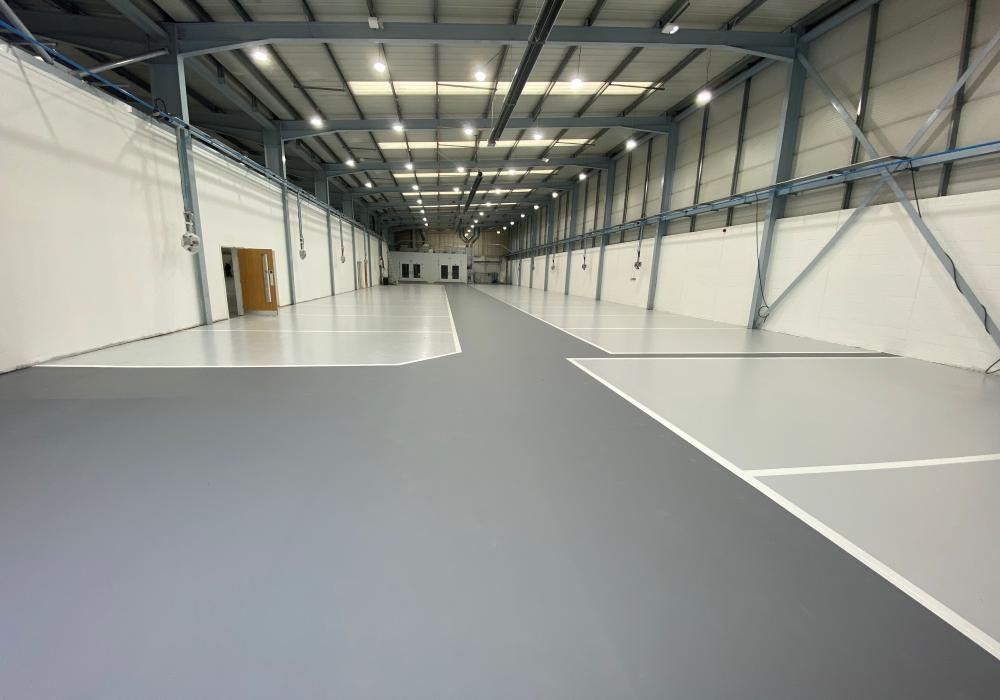
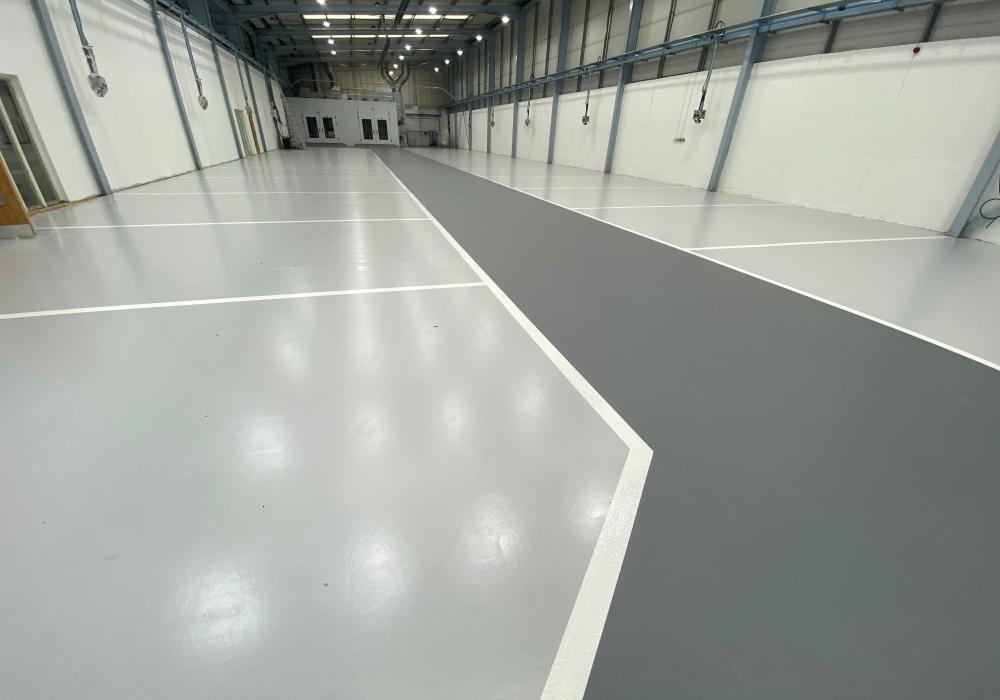
We install floors in automotive and engineering plants, workshops and body shops, as well as printing and packaging facilities, chemical sites and food and pharmaceutical production. For a car body repair centre just outside Glasgow we covered 2215m2 within a strict budget: existing epoxy coatings were removed, a 1mm epoxy scratch coat took out the damage and undulations, and two coats of UV stable, chemical resistant coating in mid grey and light grey separated traffic lanes from parking bays, finished with 100mm demarcation lines (Scotland car repair centre case study).
Installing around shutdowns
Production downtime costs more than the floor, so the programme is planned with your operations team. Typical options are:
- installing during planned maintenance shutdowns or holiday periods
- phasing the floor line by line or bay by bay
- evening and weekend working
- using fast cure products where an area must return to service quickly
Every system is laid on a mechanically prepared slab, by shot blasting or grinding with dust extraction, followed by repairs to joints, cracks and damaged concrete.
Demarcation and safety markings
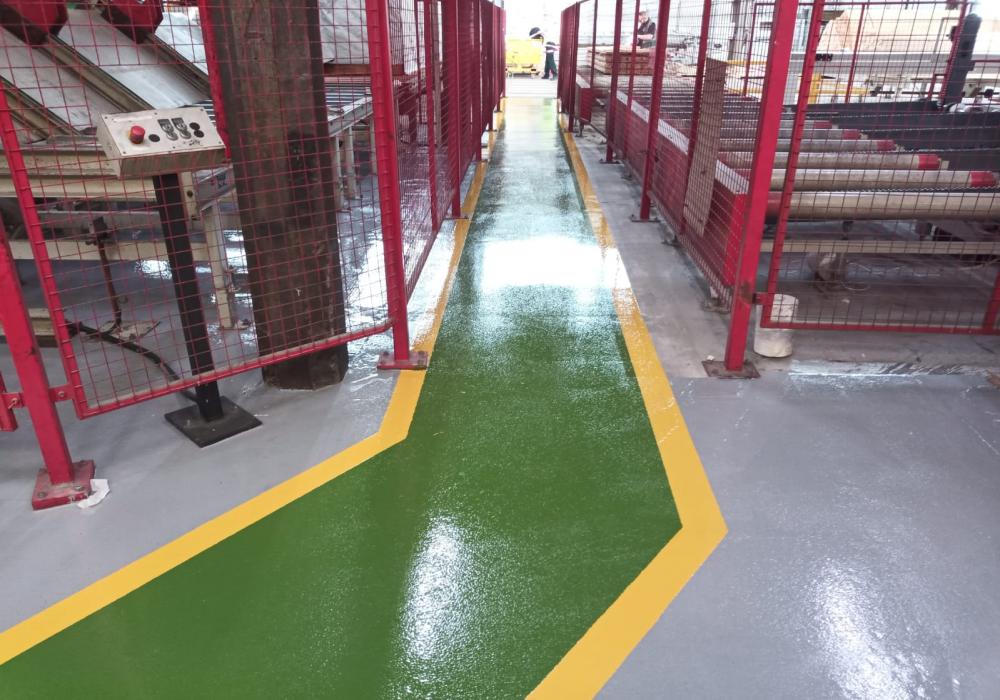
Most factory floors finish with walkways, machine exclusion zones, forklift routes and hatching. We lay these in resin as part of the same programme; see demarcation and signage. Warehouse and despatch areas attached to the factory are covered on our warehouse resin flooring page.
Common questions
What is the best floor for a factory with oil spills?
For regular oil contamination, a polyurethane screed is usually the best choice. Where the slab is already oil-soaked, it needs intensive preparation and an oil tolerant primer before any resin goes down.
Can a factory floor be coated during a shutdown?
Yes. Coatings and many screeds can be laid within planned shutdowns, and larger floors can be phased across several.
How thick should a factory floor be?
It depends on use. Coatings are measured in microns, self-smoothing floors are typically 2-4mm, and PU screeds and heavy duty systems range from 4mm to 9mm.
Is epoxy or polyurethane better for a factory?
Epoxy coatings are economical and hard wearing for lighter areas. Polyurethane systems are generally preferred where there is heavy impact, chemical attack or heat and water.
Book a factory floor survey
Call 0161 726 5095, or request a quote and we will visit your site to recommend the right factory flooring for each area.