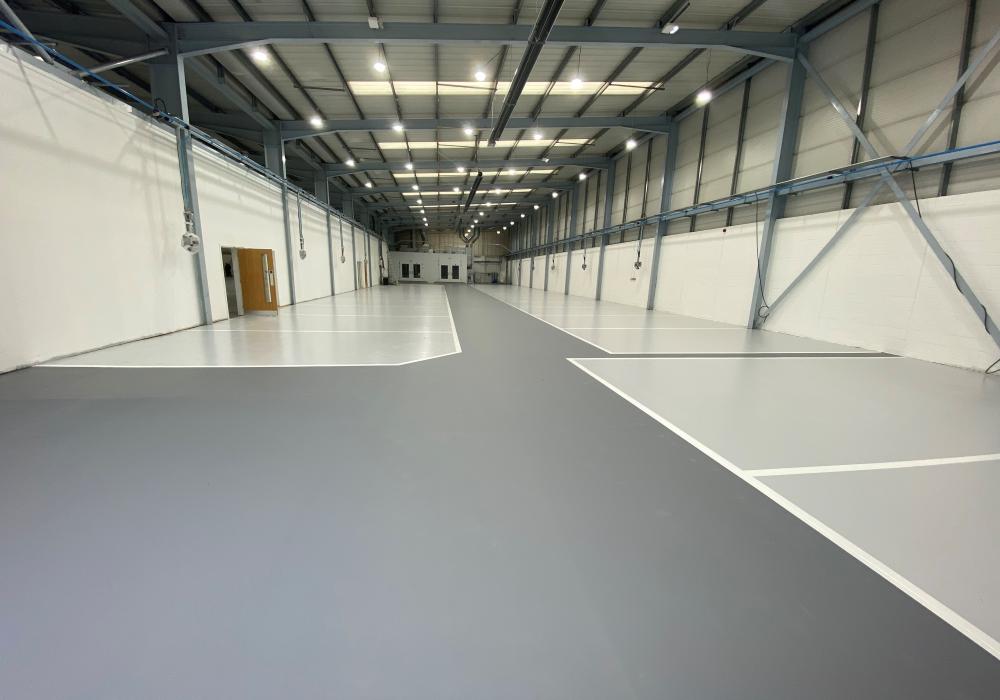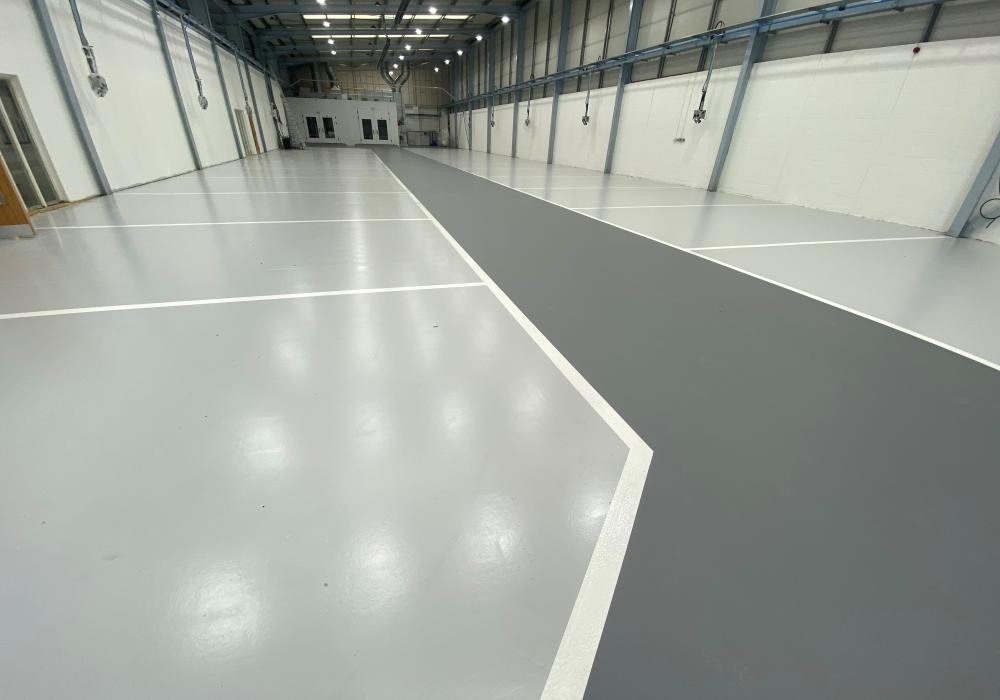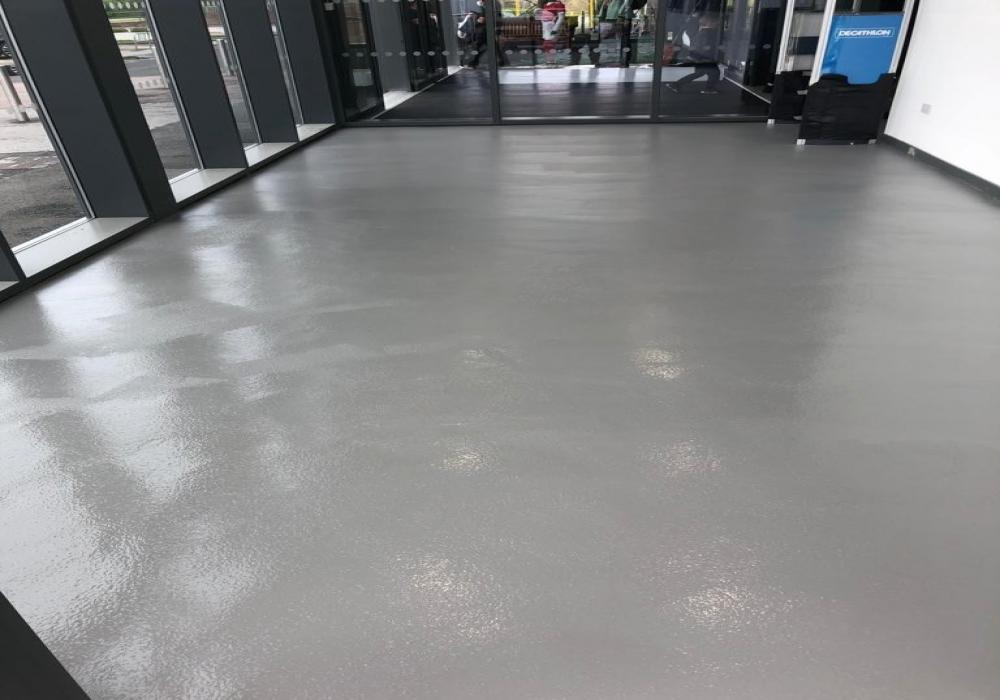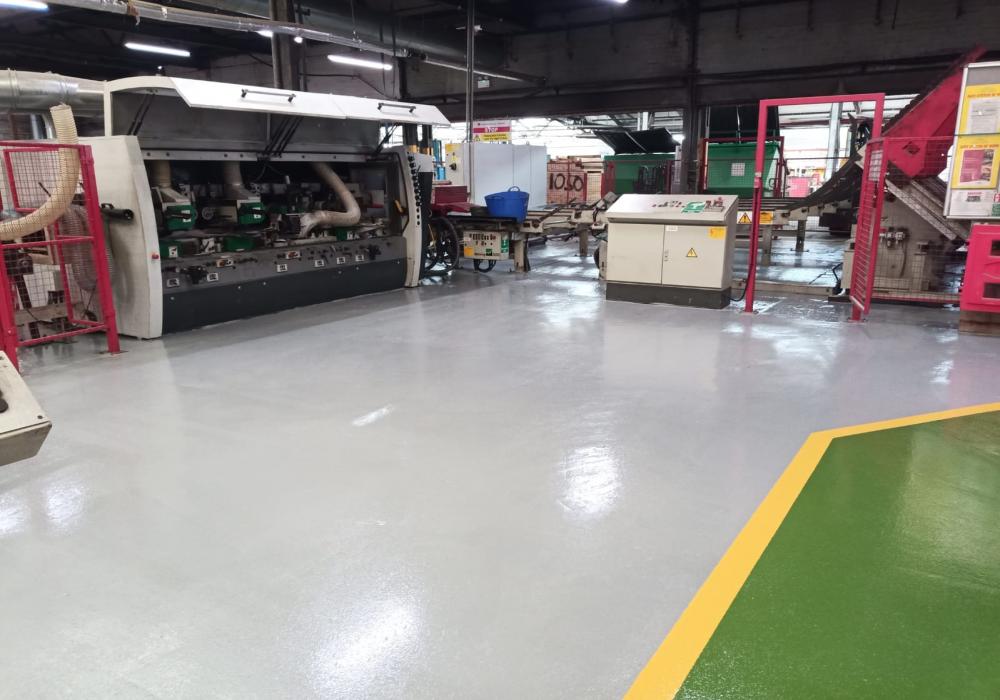

A high build epoxy floor coating is a thicker, harder wearing version of a standard floor paint. It is applied in two or more solvent free coats to a thickness of up to 1000 microns (1mm), around three to four times the film of a standard two-coat epoxy. That extra thickness gives medium duty performance, some resistance to chemical spillage and a much longer life in light duty areas, while still being quicker and more economical to lay than a screed.
Why choose a high build epoxy floor coating
High build coatings are the most common finish we lay in warehouses and light industrial units because they hit a useful middle ground:
- enough body to cope with pallet trucks and regular foot traffic
- a sealed, dust free surface, which matters in storage, bottling and packing areas
- some resistance to oils and cleaning chemicals
- a bright, even colour that improves light levels and makes demarcation stand out
Where it suits, and where it doesn't
High build coatings work well in storage areas, racking aisles, despatch areas, workshops, bottling and packing lines, and walkways. They are less suited to dock entrances with constant forklift turning, areas with hot water washdowns, or floors exposed to aggressive chemicals for long periods. For those, a polyurethane screed will last much longer. If you need more slip resistance and chemical resistance but still want a coating-type system, a multi-layer resin floor builds aggregate into every layer. For very light use, a standard epoxy floor coating costs less.
System specification
| Feature | Description |
|---|---|
| Application | Applied in 2 or more coats, solvent free |
| Intended use | Medium Duty use |
| Thickness | Up to 1000 microns |
| Chemicals | Some resistance to chemical spillage |
| Slip resistance | Slip resistance improved with the inclusion of an aggregate |
| Anticipated Life | LD 5-7 Years MD 2-4 Years |
Using a scratch coat on uneven slabs
Because a coating follows the slab, any undulations, old repairs and patches can show through. On older floors we often lay a squeegee-applied epoxy scratch coat first. This fills minor hollows and imperfections so the high build coats go on to a flatter, more uniform base.
At a vaping distributor in Derby, a 720m2 area was being converted into a bottling plant and storage area that needed a dust free environment and a minimum life expectancy of five years. After shot blasting and repairing weak spots, we scratch coated the whole area at just under 1mm, then laid two coats of solvent free epoxy high build coating with aggregate scattered into the first coat and back rolled for a slip resistant finish (Derby high build coating project).
Installation step by step
- Site survey and agreement on colours, slip resistance and the areas to be phased.
- Enclosed shot blasting or diamond grinding, including edges and around columns.
- Repairs to cracks, joints and weak concrete exposed by the preparation.
- Scratch coat where the slab needs levelling out.
- First high build coat, with aggregate broadcast if required.
- Second high build coat to seal in the aggregate and give the final colour.
- Demarcation, walkways and stencils.
Colours and anti-slip options
Slip resistance is improved by including an aggregate, normally scattered into the first coat and sealed by the second. The amount and grade of aggregate is agreed for each area. Contrasting colours can be used for walkways and work zones. High build coating can also be the base for a decorative flake finish: in a 90m2 staff canteen for the same Derby client, resin flakes were blinded into a high build epoxy and sealed with a clear UV stable polyurethane coat (canteen flake floor).
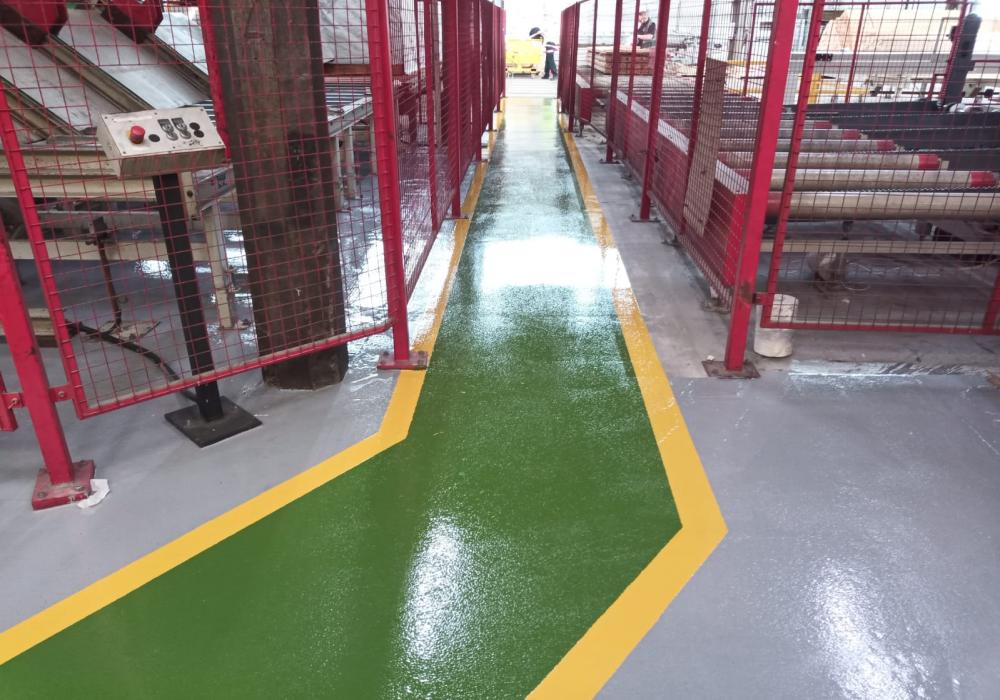
On a larger scale, an international timber importer's 998m2 warehouse in Scotland received two coats of hard wearing epoxy in mid grey with a small aggregate, plus green walkways and yellow lines, all completed in three days.
Common questions
What is the difference between a high build coating and floor paint?
Thickness. A standard coating is up to 300 microns; a high build coating is up to 1000 microns, so it wears longer and resists more.
How long will a high build epoxy floor last?
Our specification gives an anticipated life of 5-7 years in light duty use and 2-4 years in medium duty use.
Can a high build coating take forklift traffic?
It will take occasional forklift traffic in storage areas. For main forklift routes and loading bays we recommend a screed.
Can it be laid over an existing epoxy floor?
If the existing coating is well bonded it can be prepared and overcoated. If it was laid without proper preparation, it should be removed first.
Arrange a survey
High build coatings form part of most warehouse flooring and factory flooring projects we install. Call 0161 726 5095 or request a quote.