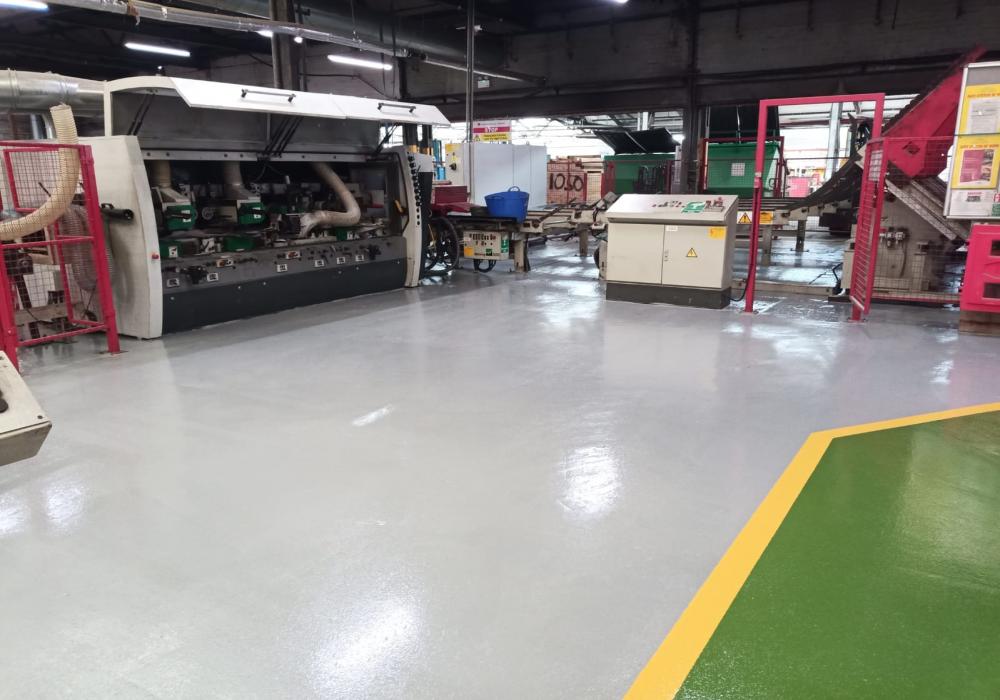

An epoxy floor coating is the most economical way to turn a dusty concrete slab into a clean, coloured, easy-to-sweep surface. Our standard epoxy resin flooring coating is a low viscosity, coloured, solvent free epoxy applied in two coats to a total of about 0.25mm, with a gloss finish. A polyurethane floor coating can be used instead, or as the top coat, where a matt or silk finish, colour stability or extra chemical resistance is wanted.
What epoxy and polyurethane floor coatings are
Both are two-part resins that cure to a hard film bonded to the concrete. They are rolled on rather than trowelled, so they follow the profile of the slab and add little height. Because our coatings are solvent free, they can be used where a solvent based product might taint goods or give off unacceptable odours, which is why they are often chosen for occupied buildings and food areas.
The difference between the two is mainly in the finish. Epoxy is hard and economical; polyurethane is slightly more flexible and is available in UV stable grades that hold their colour better in daylight.
Where an epoxy floor coating works well
Coatings are a cost effective choice for:
- warehouse storage areas and racking bays
- production and assembly areas with light to medium traffic
- plant rooms and service areas
- food preparation areas
- general factory flooring, including walkways and colour-coded zones
Where a thicker system is the better choice
A two-coat film is thin, so it will not hide a badly damaged slab and will wear through sooner under heavy forklift traffic, pallet truck wheels or dragged loads. In those areas look at a high build floor coating for medium duty use, or a PU screed where impact, heat or heavy chemicals are involved. If you simply want to stop an old floor dusting for a short period, a resin floor seal costs less again.
System specification
| Feature | Description |
|---|---|
| Application | Applied in 2 or more coats, generally solvent free |
| Intended use | Light to medium use |
| Thickness | Up to 300 microns |
| Appearance | Gloss, Matt or Silk |
| Hygiene/cleanability | Improves cleanability over concrete |
| Anticipated Life | LD 2-3 Years MD 1-2 Years |
How we install a floor coating
- Survey: we check the slab for moisture, old coatings, oil contamination and damage, and confirm the traffic it will see.
- Mechanical preparation: the surface is shot blasted or diamond ground with dust extraction to remove laitance and give the coating a key. Coatings rarely fail on a properly prepared slab.
- Repairs: cracks, spalled joints and holes are filled with resin repair mortars and sanded flush.
- First coat: the first coat is rolled on and allowed to cure.
- Second coat: the finish coat is applied, with aggregate if slip resistance is needed.
- Line marking: walkways and bay lines are added once the floor has cured.
Finishes, colours and slip resistance
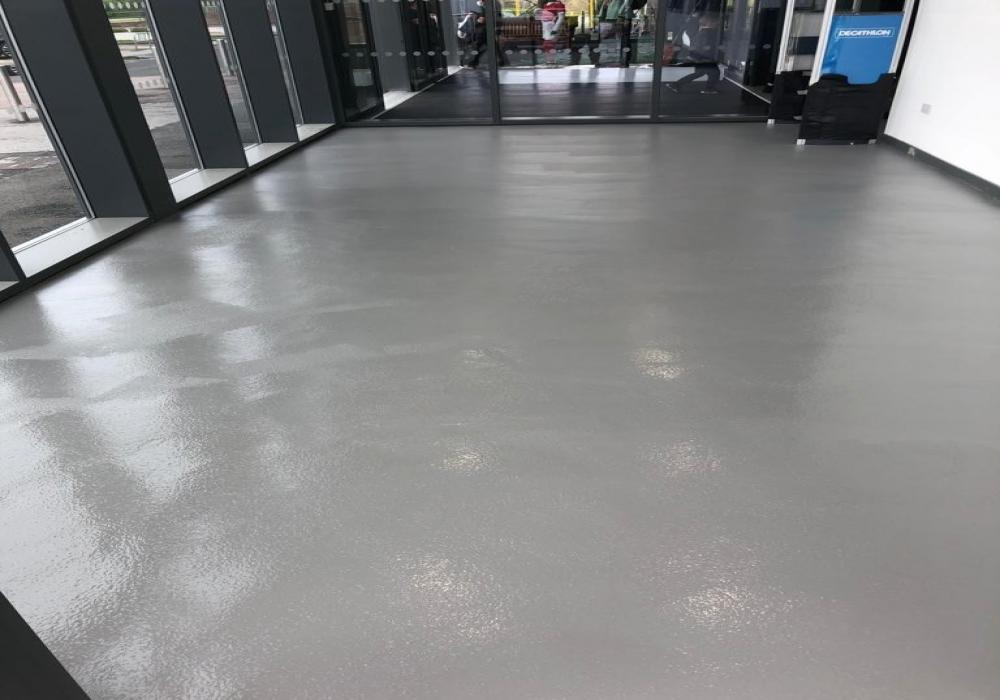
Coatings are available in gloss, matt or silk finishes and a range of colours, so you can separate traffic lanes from work areas or brighten a dark building. A light broadcast of aggregate can be incorporated to give a degree of slip resistance, which we recommend wherever the floor may be wet or dusty.
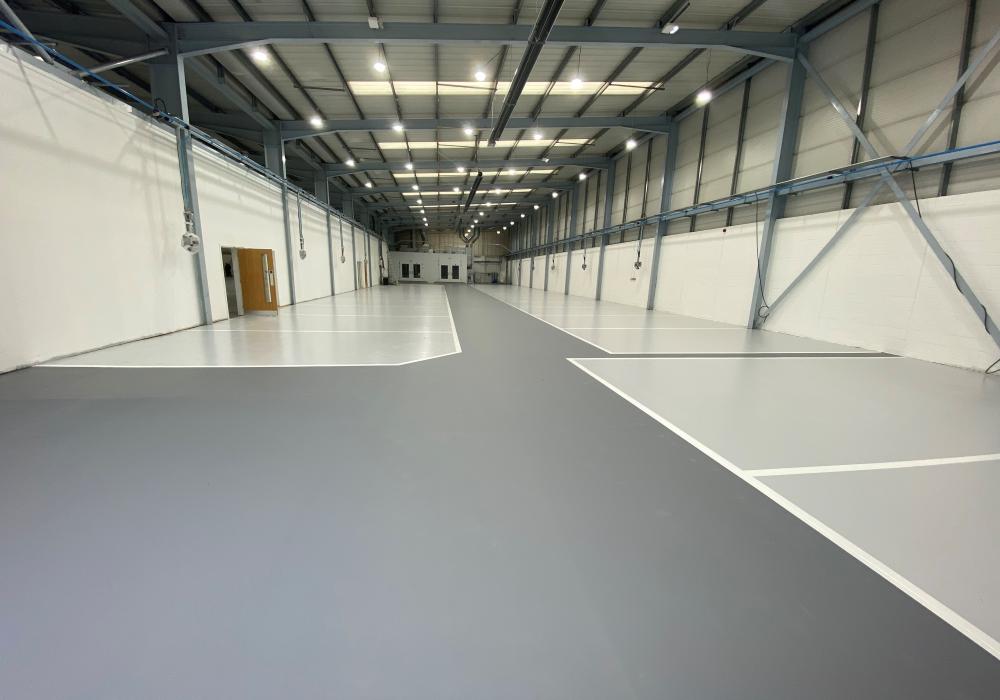
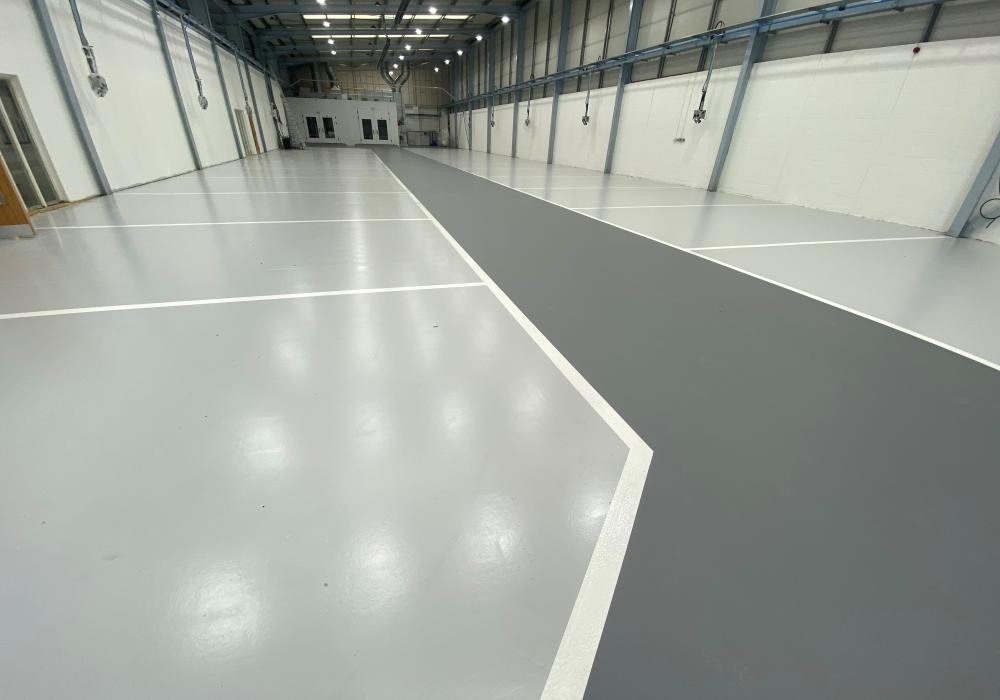
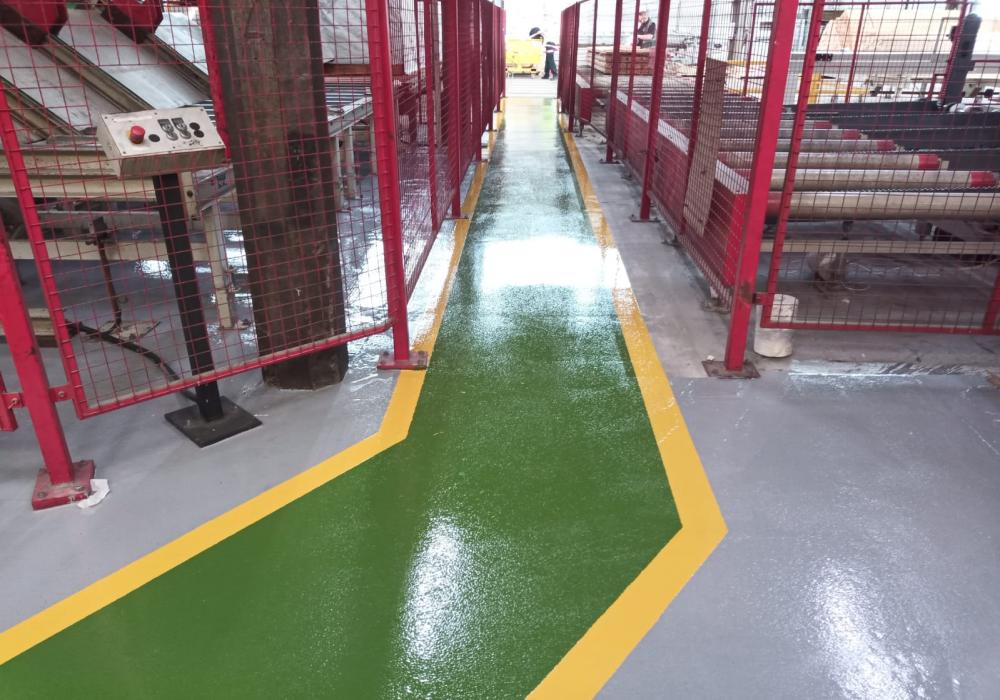
At a car body repair centre near Glasgow we used an epoxy scratch coat followed by two coats of UV stable, chemical resistant coating in mid grey and light grey to separate traffic lanes from parking bays across 2215m2 (read the case study). For a UK rail company in Nottingham, two coats of hard wearing epoxy in green formed 250 linear metres of walkways edged in safety yellow (rail walkways project).
Common questions
How long does an epoxy floor coating last?
The anticipated life in our specification is 2-3 years in light duty use and 1-2 years in medium duty use. Heavier traffic shortens this; thicker systems last longer.
Is epoxy or polyurethane floor coating better?
Epoxy is the economical all-rounder. Polyurethane is often chosen as a top coat for UV stability, a matt finish or better chemical resistance, and the two are frequently used together.
Can you coat over an old painted floor?
Only if the old finish is sound and compatible. Failing or poorly bonded coatings must be removed mechanically first so the new coating bonds to the concrete.
Will a coating smell while it is applied?
Our coatings are solvent free, so they are suitable for areas where solvent odours would be a problem.
Get a price for your floor coating
Coatings are used throughout our warehouse resin flooring and factory resin flooring projects. Call 0161 726 5095 or request a quote to arrange a site survey.