Resin floor repairs restore damaged epoxy and polyurethane floors to a safe, sound and good-looking condition without replacing the whole floor. Resin floors are durable, but like any flooring system they can suffer impact damage, movement joint deterioration and general wear over time. Contact Flooring repairs resin floors in warehouses, factories and commercial buildings across the UK, using rigid and flexible repair mortars selected to suit the damage and the way the floor is used.
Dealing with damage early matters. A chipped or lifting resin floor is a slip and trip hazard, and small defects let water, oil and chemicals under the coating, where they cause further damage. Prompt repairs help you stay compliant with health and safety requirements and avoid the cost of larger repairs later.
Resin floor repair: common types of damage
- Impact damage. Heavy machinery, equipment and dropped tools cause cracks, chips and gouges. Left alone, these defects grow and can lead to damage to the substrate underneath.
- Movement joint deterioration. The joints that allow the floor to expand and contract can break down over time. If they are not repaired, further movement causes more significant damage either side of the joint.
- General wear and tear. Heavy foot traffic, equipment and chemical exposure gradually wear the resin, leading to scratches, fading and loss of slip resistance.
- Chemical spills. Spills that are not cleaned up, or chemicals the original system was not designed for, can soften or stain the surface.
- Delamination. Coatings that were laid without proper mechanical preparation can lift and peel away from the concrete.
Damaged epoxy floor repair
Epoxy coatings are among the most common resin floors in warehouses and factories, and they are often the floors we are asked to repair. Typical problems are chips along traffic routes, worn-through patches where forklifts turn, and coatings that are peeling because the concrete was never properly prepared.
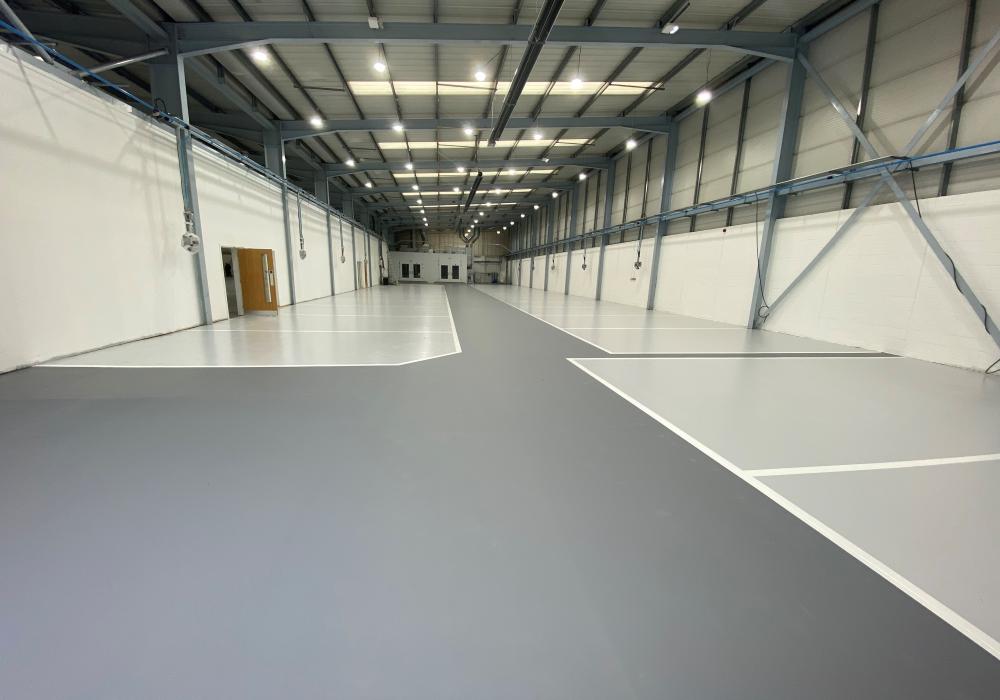
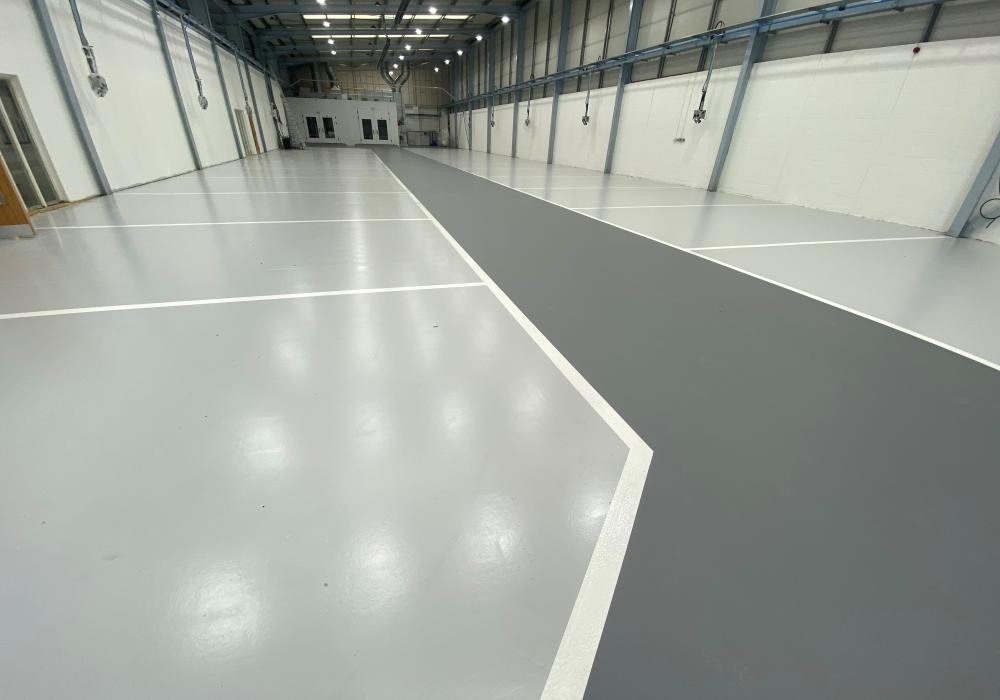
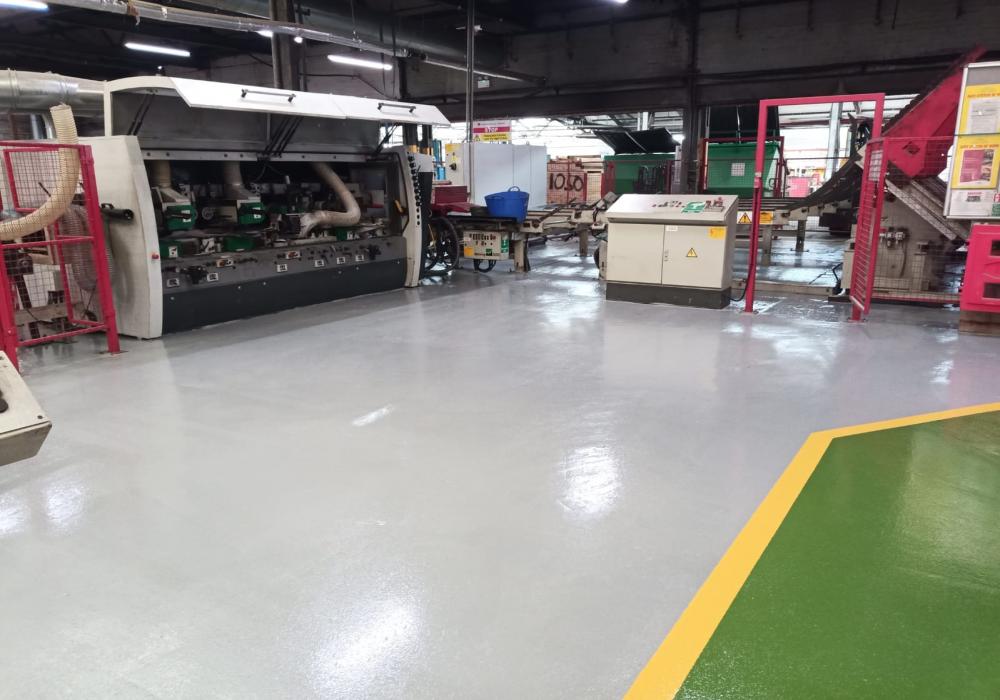
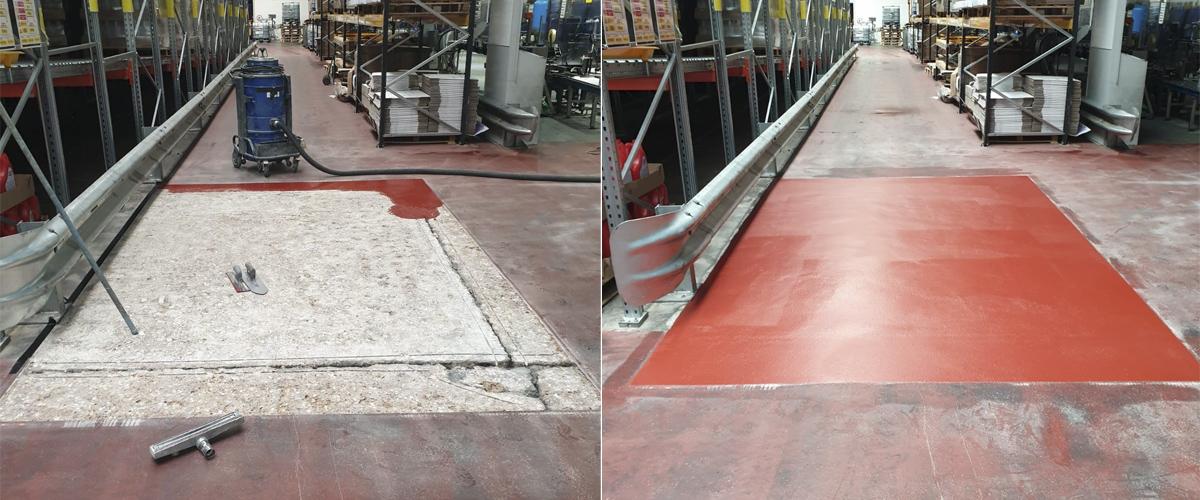
Where damage is local, the affected area is cut or ground back to sound material, rebuilt with a repair mortar and then re-coated. Where an old coating is failing across a large area, it is often better to remove it completely, carry out repairs to the concrete, and install a new system. On our 540m2 West Midlands fluid manufacturing project, a coating applied without mechanical preparation was already failing before the building was in use. We removed it by shot blasting, repaired previous damage and joints with suitable repair mortars, and installed a high build epoxy with a polyurethane UV stable, chemical resistant top coat.
Rigid and flexible repair mortars
The right repair material depends on the floor and the damage:
- Rigid repair mortars rebuild chipped, holed and spalled areas, restoring strength to the floor under heavy traffic and impact.
- Flexible repair materials suit areas that move, such as joints and floors over substrates that flex, where a rigid repair may crack.
Our aim is a repair that is restored to the strength of the original floor and finished to blend in with the surrounding surface as closely as the system allows.
How resin floor repairs are carried out
- Assessment and quotation. We inspect the floor, establish what has caused the damage and recommend the best repair. We then provide a no-obligation quote.
- Preparation. Damaged resin and concrete are removed, edges are cut back to sound material and the area is ground and vacuumed. Careful mechanical preparation is essential for the repair to bond.
- Repair. Rigid or flexible repair mortars are installed and allowed to cure.
- Finish. The repair is sanded flush where needed and re-coated, and any line marking is reinstated.
We work to keep disruption to a minimum, taping off areas so the rest of the building can keep working, or scheduling the work out of hours.
When a repair is not enough
If a resin floor is damaged across most of its area, or the wrong system was chosen for the conditions, repeated patch repairs can cost more over time than a new floor. In that case we will tell you, and explain the options for concrete floor repair and renovation. For bare concrete rather than resin, see our warehouse floor repairs service.
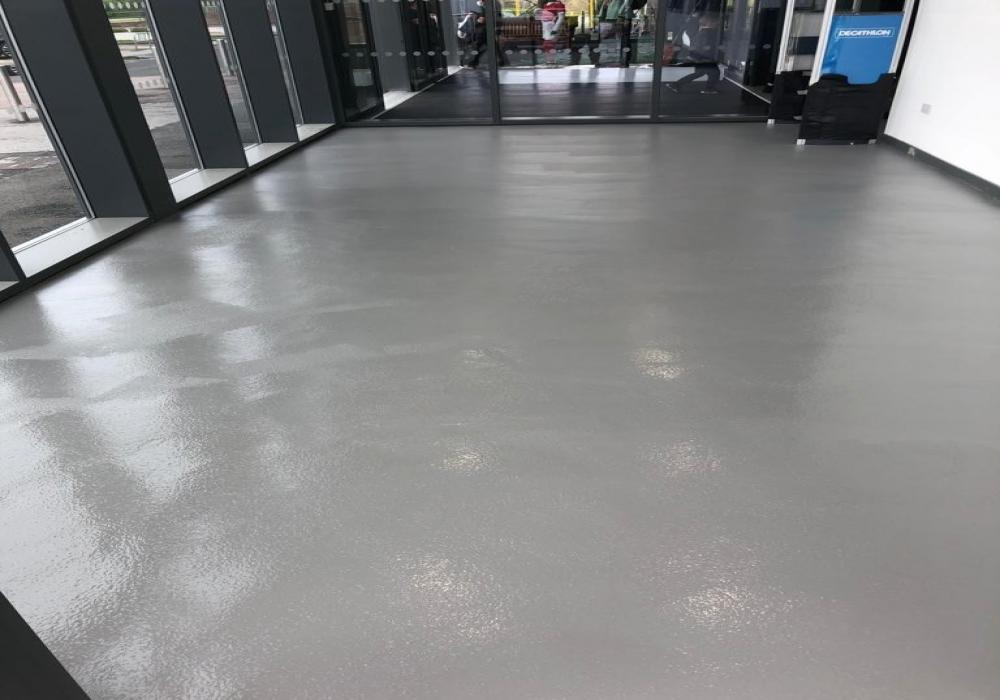
Our 322m2 London flexible self-smoothing project shows what can be done when a floor has failed: a polyurethane self-levelling system that was failing after a week, because priming had not been carried out properly, was removed. The substrate was repaired, primed throughout and a new 3mm polyurethane flexible self smoothing system was installed.
Common questions
Can you repair a damaged epoxy floor without replacing it?
Usually, yes. Chips, gouges and worn patches can be cut back, rebuilt with a repair mortar and re-coated. Replacement is only worth considering when damage covers most of the floor.
Will the repair match the rest of the floor?
We finish repairs to blend with the surrounding floor as closely as possible. An older floor that has faded or worn may still show a difference, and in some cases re-coating a wider area gives a more even result.
Why is my resin floor peeling?
Peeling is very often caused by poor or missing mechanical preparation when the floor was installed. The coating bonds to dust and laitance rather than sound concrete and lifts under traffic.
Do you repair joints in resin floors?
Yes. Deteriorated movement joints are cleaned out, the edges rebuilt and the joint refilled with a flexible material. See our slab joint repair service.
Get your resin floor repaired
The longer damage is left, the more it costs to fix. For a free, no-obligation quote or to arrange a site visit, call 0161 726 5095, request a quote or contact us.