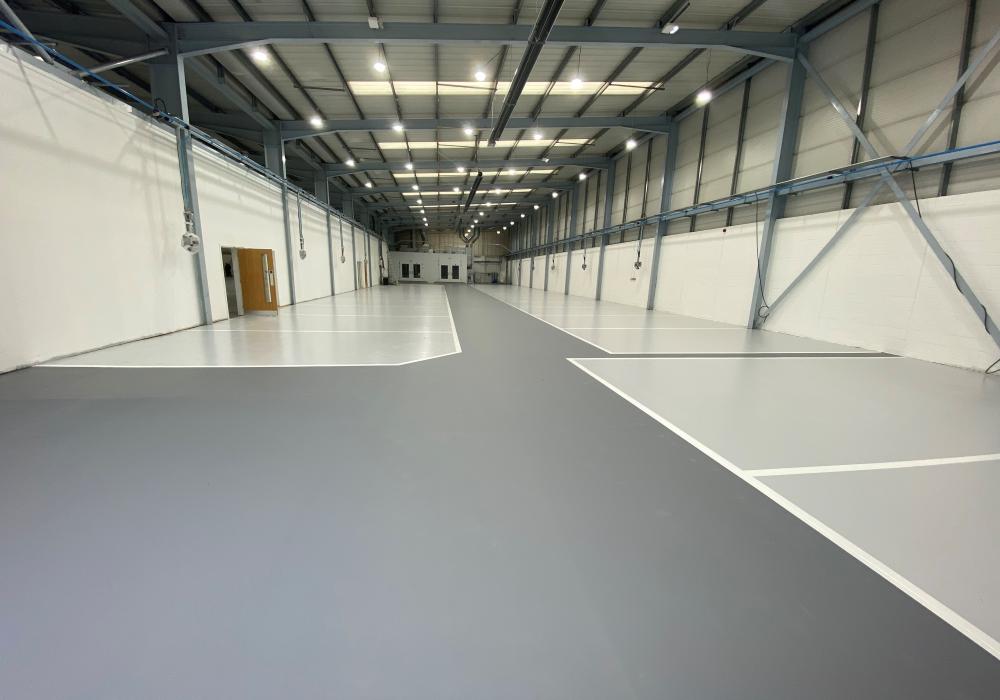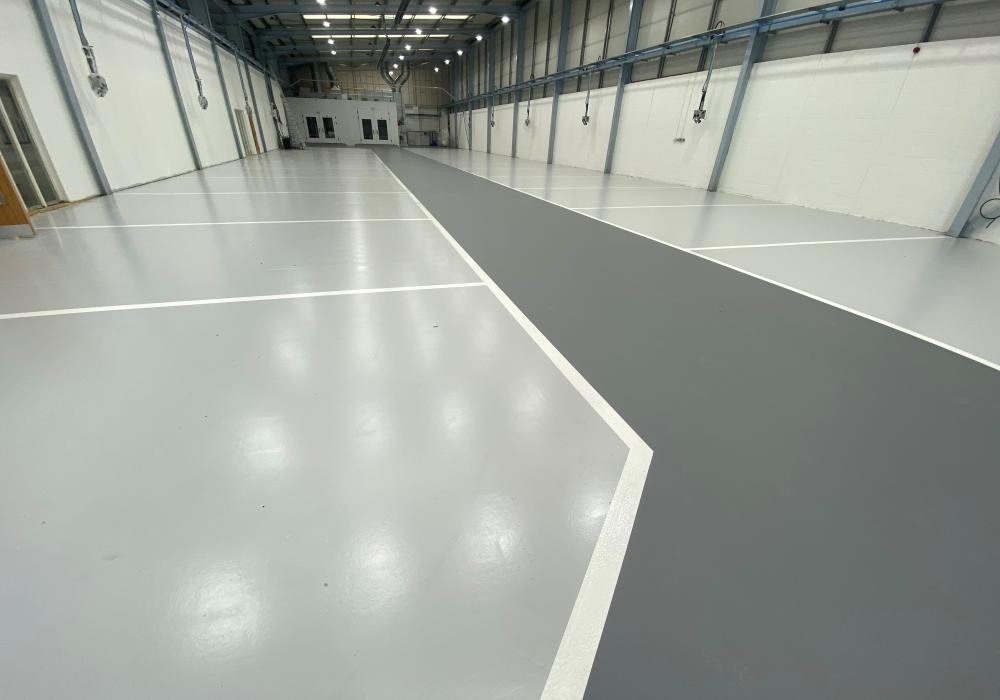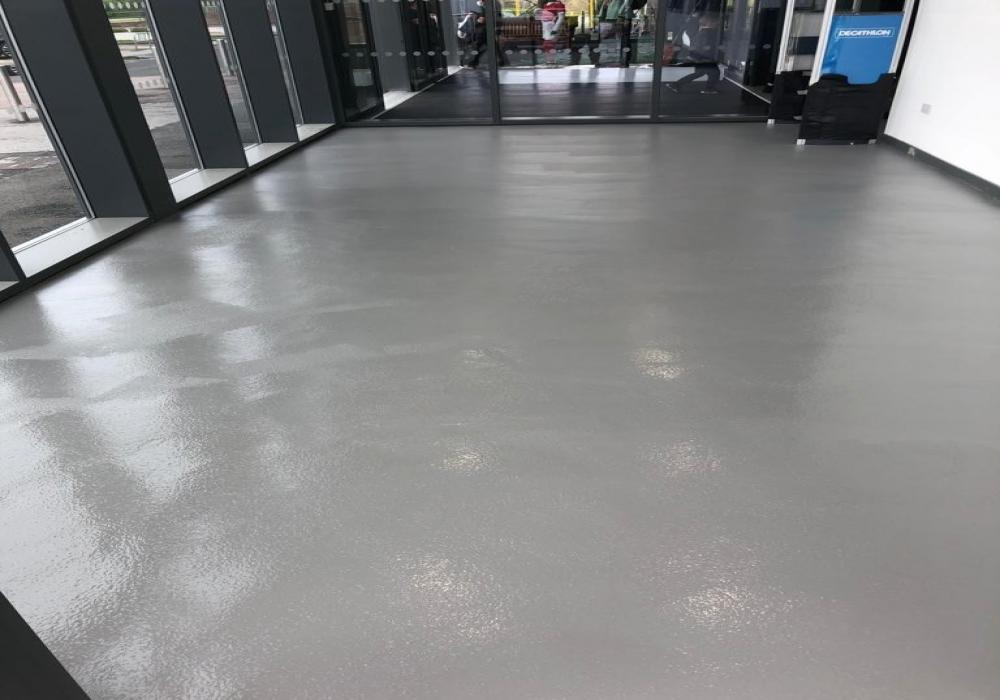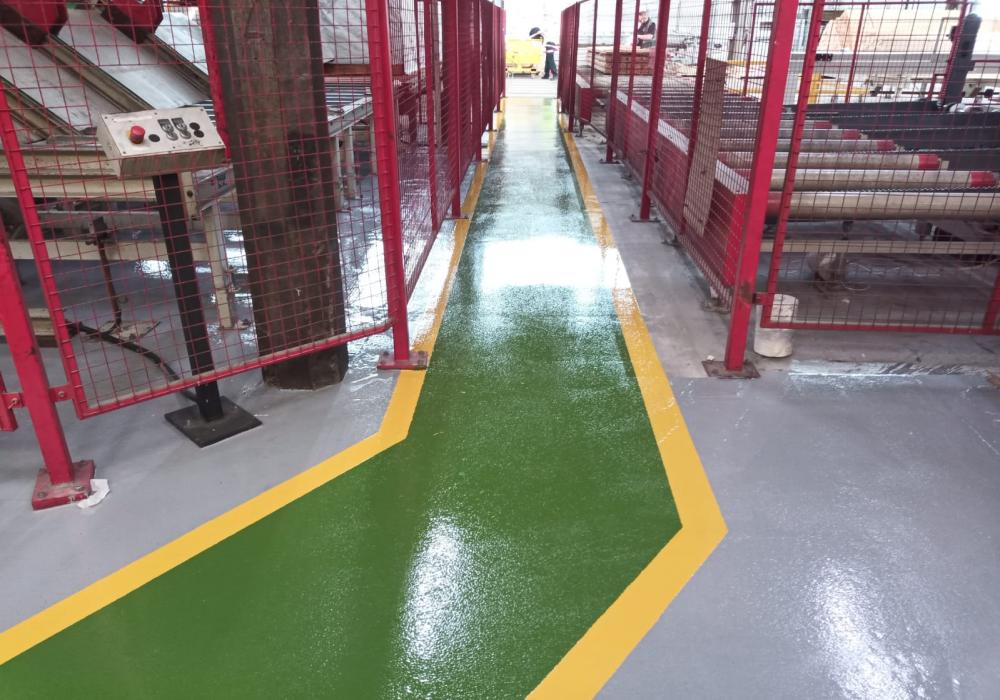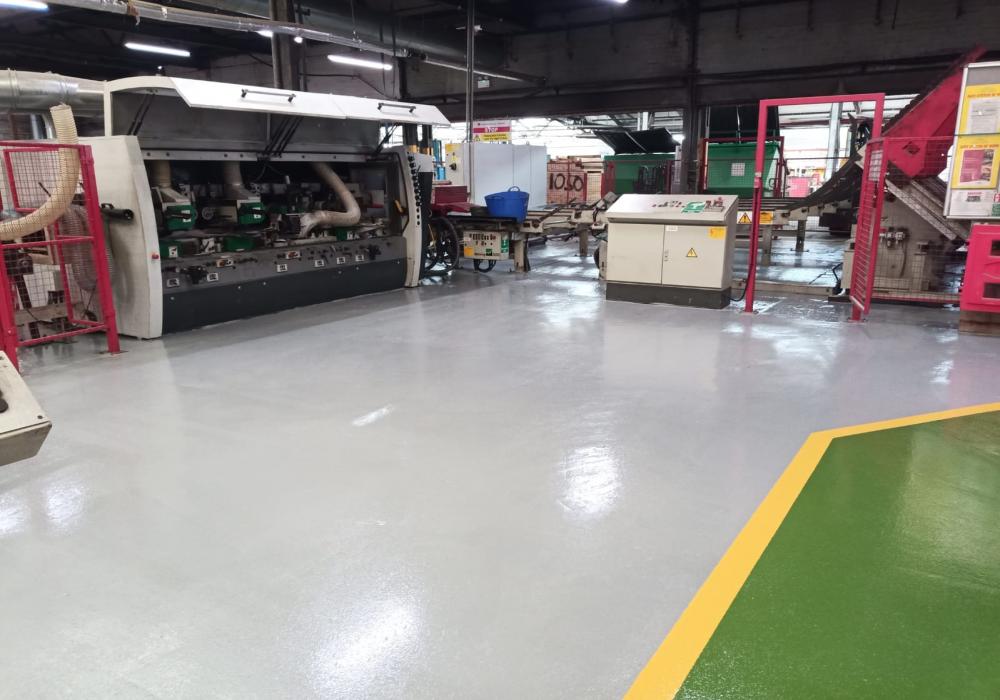

Resin screed flooring is a trowel-finished, heavily filled resin floor, generally sealed with a surface coat to reduce porosity. The most widely used type is polyurethane screed, often shortened to PU screed. We install PU screeds across many industries because they are hard wearing, impact, chemical and slip resistant. Our standard resin screed is a three-part system laid at 4mm with a seal coat finish, for medium to heavy duty use.
What a polyurethane screed is
A PU screed is mixed from resin, hardener and a high proportion of graded filler, then spread and trowelled by hand onto a primed slab. Being so heavily filled, it behaves more like a tough mortar than a paint. The seal coat closes the surface for cleaning and sets the final texture and grip.
Where a PU screed is the right choice
- production areas with oils, coolants or process chemicals
- food and drink processing, where floors are washed down
- goods in and goods out areas with forklift and pallet truck traffic
- workshops and engineering areas with dropped tools and components
- external canopies and loading areas that see wet, heavy traffic
When to consider another system
PU screeds have a matt finish as standard, so if a high gloss look is the priority in a light-use area a coating or self-smoothing floor is a better fit. For the most demanding areas, with very heavy impact or constant turning traffic, a thicker 6-9mm heavy duty resin floor is specified. Where a smoother surface is needed but loads are still heavy, look at a heavy duty flowable floor.
System specification
| Feature | Description |
|---|---|
| Application | 3 part heavily filled system incorporating a seal coat finish |
| Intended use | Medium Duty to Heavy Duty use |
| Thickness | 4mm |
| Chemicals | Very good resistance to chemical spillage |
| Slip resistance | Some resistance in wet conditions subject to seal coat selection |
| Anticipated Life | MD 10-12 Years HD 5-7 Years |
| Appearance | Fine texture or smooth finishes available |
| Static | Static controlled versions available |
| Cleanability | Very good cleaning properties if seal coat is maintained |
Preparation and installation of a resin screed
- Survey and moisture check: damp substrates must be dealt with before a screed goes down.
- Intensive mechanical preparation: grinding or shot blasting to remove old finishes, contamination and weak concrete.
- Chasing: anchor grooves are cut with diamond blades at edges, doors and day joints so the screed locks into the slab.
- Repairs and primer: repairs to damage and joints, then a primer suited to the substrate, including oil tolerant primers on contaminated floors.
- Screed: spread and hand trowelled to thickness.
- Seal coat: applied to close the surface and set the texture.
At a household distribution centre in Northwich, a wet, heavily trafficked area under a new canopy was dried with space heaters for over a week, moisture tested, had 1-2mm removed from the surface and ground smooth. Repair mortars and a 6mm PU screed were then installed across 165m2 in one day (Northwich PU screed case study).
At an oil and fluids manufacturer in Wolverhampton, where we have installed over 3000m2 of 6mm polyurethane screed, an oil-contaminated goods out area was ground for two days, primed with an oil tolerant primer and chased with diamond blades before 692m2 of 6mm screed was laid over three days (Wolverhampton project).
Finishes, colours and slip resistance
Resin screeds are available with a fine texture or smooth finish. Slip resistance in wet conditions depends on the seal coat chosen, and extra aggregate can be blinded into high-risk areas such as roller shutter doors where forklifts come in from wet yards. Static controlled versions are available.
A screed can also be combined with coloured coatings. At an animal sector products company, 370m2 of 6mm PU screed was laid by hand, then overcoated in three colours of hard wearing epoxy to separate racking, walkways and forklift routes, with 100mm yellow lines to finish (read the case study).
Common questions
How thick is a PU screed?
Our standard resin screed is 4mm. We also lay 6mm and 9mm polyurethane screeds where traffic or levels demand it.
How long does a polyurethane screed last?
Our specification gives an anticipated life of 10-12 years in medium duty use and 5-7 years in heavy duty use, provided the seal coat is maintained.
Can a PU screed be laid on an oily floor?
Often, yes, after intensive preparation to remove as much contamination as possible and an oil tolerant primer.
Can a resin screed have a gloss finish?
The standard finish is matt. A coloured coating can be applied over the screed for zoning, but a high gloss is not a standard screed finish.
Get advice on PU screed
Resin screeds are central to our factory resin flooring and warehouse flooring work. Call 0161 726 5095 or request a quote.