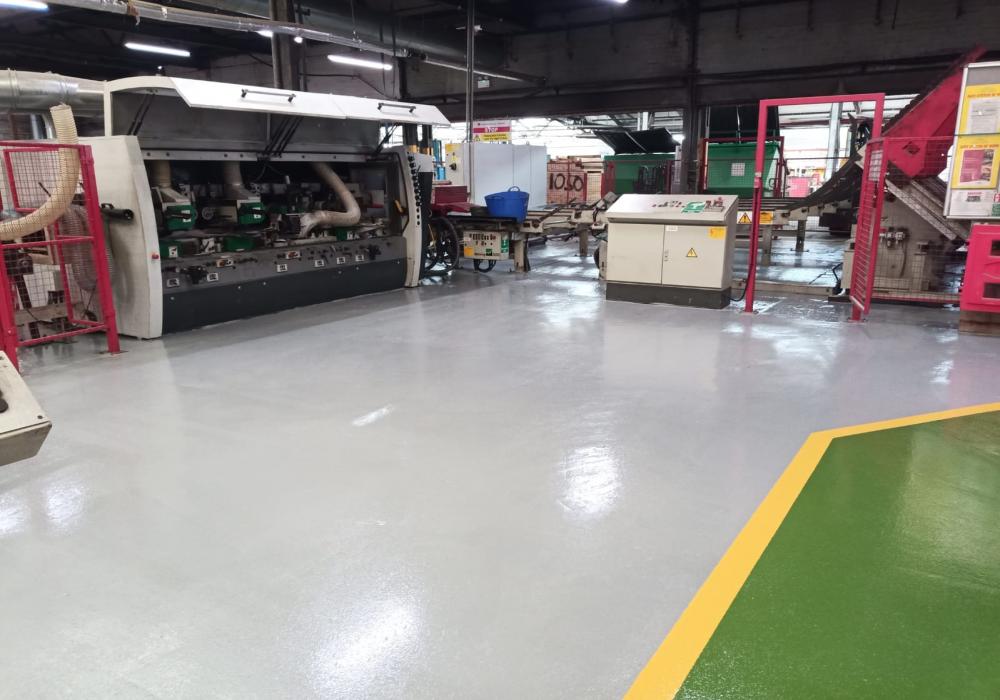

Multi-layer resin floors are built up from several layers of resin with aggregate broadcast between them, which is why they are often called "sandwich" systems. Each layer locks in a dressing of aggregate, so the finished floor, typically 2mm to 3mm thick, has texture and strength through its depth rather than just on the surface. The result is a medium to heavy duty floor with good chemical resistance and good slip resistance in wet conditions.
How multi-layer resin floors are built
A multi-layer system can be based on floor coatings or on flow applied resin. A typical build is:
- a primer or scratch coat on the prepared concrete
- a body coat of resin, fully blinded to refusal with aggregate such as coloured quartz
- removal of loose aggregate once cured
- a further resin layer and aggregate where extra thickness is specified
- a final seal coat that encapsulates the aggregate and sets the finished texture
The size of the aggregate and the thickness of the seal coat control how rough the surface is. A heavier seal coat gives a smoother, more cleanable finish; a lighter one leaves more grip.
Where a multi-layer floor suits
- food and drink production, storage and distribution areas that are cleaned wet
- commercial kitchens, wash areas and changing rooms
- ramps, doorways and production areas where spills are common
- warehouse areas that need more slip resistance than a coating gives
Where a multi-layer floor is not the right answer: if you need a very smooth, easily wiped surface for clean rooms or electronics, a flow applied self-smoothing floor is better. For hot washdowns, heavy impact and constant forklift turning, a heavy duty trowelled resin floor or PU screed will cope better with the conditions. If the area is dry with light traffic, a high build coating is a more economical choice.
System specification
| Feature | Description |
|---|---|
| Application | Multi-coat layered including a selection of aggregate between coats |
| Intended use | Medium Duty to Heavy Duty use |
| Thickness | 2mm-3mm depending on usage and specification |
| Chemicals | Good resistance to chemical spillage |
| Slip resistance | Good resistance in wet conditions subject to aggregate selection |
| Anticipated Life | MD 2-5 Years HD 2-3 Years (3mm system) |
Preparation and installation
Because a multi-layer floor is bonded to the concrete through its first layer, preparation is just as important as with any thinner system. We grind or shot blast the slab with dust extraction, remove old finishes, repair defects and check moisture. Where the existing floor is an old resin system, we identify what it is first, because not every resin can be overlaid with another.
For an Italian food distributor taking over a former food building, the existing 2-3mm quartz floor turned out to be methyl methacrylate rather than epoxy, so it could not simply be overlaid. The floor and coves were removed and the slab ground with a triple headed grinder. We then laid a solvent free epoxy scratch coat thick enough to hold the client's chosen 0.7-1.2mm coloured quartz, fully blinded the floor, removed the excess and sealed it with a coloured epoxy coat that encapsulated the aggregate. 84 linear metres of 100mm high epoxy coving finished the 220m2 area (food distributor case study).
Finishes and slip resistance options
Slip resistance in wet conditions depends on the aggregate chosen, and we agree the grade with you for each area. Coloured quartz gives a speckled, decorative finish; natural aggregates give a plainer look. Different textures can be used in the same room, rougher at wet processes and smoother in walkways. For more on grip and aggregates, see our anti-slip resin flooring page.
Multi-layer floors can be finished with integral resin coving at the wall junction, which helps cleaning in food and hygiene areas.
Common questions
What is a sandwich resin floor?
It is another name for a multi-layer floor: layers of resin with aggregate sandwiched between them, finished with a seal coat.
How thick is a multi-layer resin floor?
Typically 2mm to 3mm, depending on usage and specification.
How long does a multi-layer floor last?
Our specification gives an anticipated life of 2-5 years in medium duty use and 2-3 years in heavy duty use for a 3mm system.
Is a textured floor harder to clean?
A rougher finish holds more dirt, so we balance grip against cleaning. A heavier seal coat gives a smoother surface where cleaning matters most.
Talk to us about multi-layer floors
Multi-layer systems are used in factory resin flooring, food production and warehouse flooring projects across the UK. Call 0161 726 5095 or request a quote to arrange a survey.