
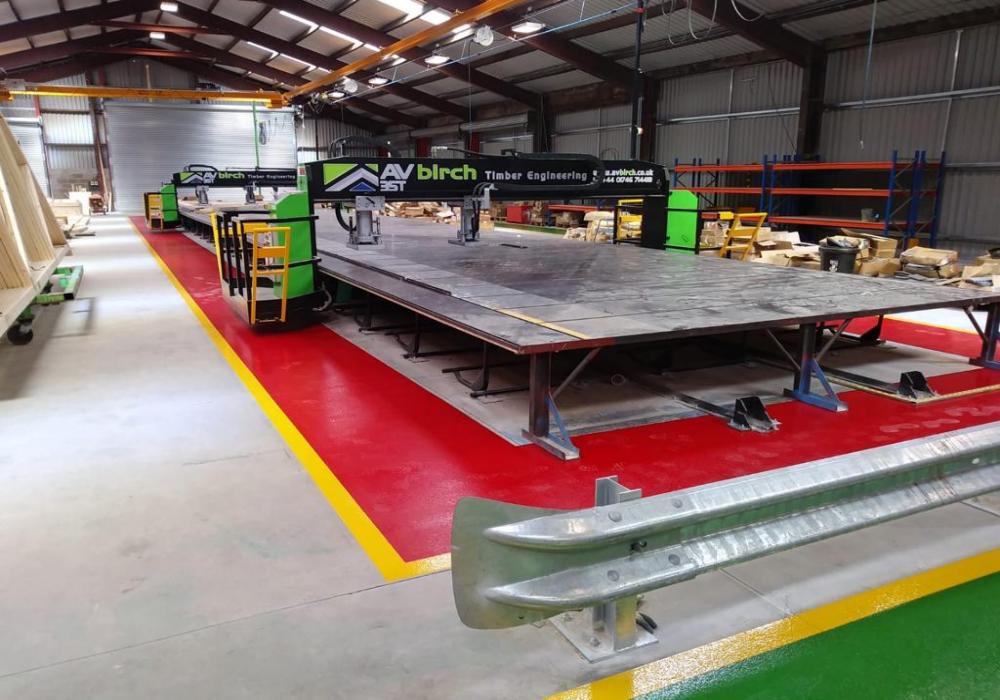
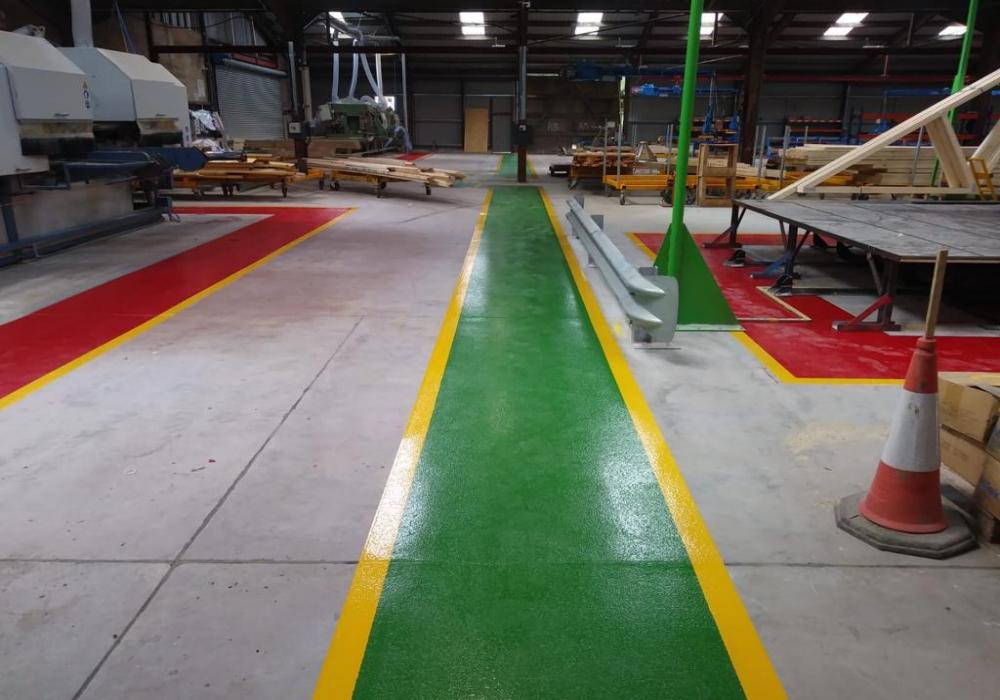
Timber structures facility epoxy resin demarcation | 311 m2 + safety yellow lines
What the client wanted to achieve
This client had recently taken over a building that had also been used for the food industry for distribution and manufacturing, the area that was shown to us was an existing quartz screed system installed at 2-3mm with 100mm high 38mm radius coving. As with all existing screed quartz systems there are potentially two products it could be, epoxy or methyl methacrylate, as this was an overlay type installation we were to carry out, if the system had been epoxy then the installation would have been simple as epoxy on top of epoxy is more than suitable, as our hunch became real we discovered that the system we were looking at was methyl methacrylate. With methyl methacrylate the only way you can tell is when you start to grind the surface the smell that comes from the product is quite strong but with Contact Flooring Groups knowledge built up over 21 years’ experience in the industry we know what they were dealing with. We informed the client what he currently had on his floor and his request was to remove the complete system and start again with an epoxy quartz version.
The solution
The first thing Contact flooring had to consider here was how to give the client a new floor at was a very challenging budget, once the existing methyl methacrylate floor and coves were removed with tile lifters, kango’s and a von-arx we then had to further prepare the floor with a triple headed scan-maskin grinding machine, the 100mm high coves were also removed including the plastic trim they had been terminated too. We carried out some minor repairs and then started to install a solvent free epoxy scratch coat by squeegee to be thick enough to hold the 0.7mm – 1.2mm aggregate the client had chosen, once the floor area had been fully blinded with the coloured quartz aggregate we knew the outcome was going to be good. After we swept and vacuumed the excess aggregate from the surface the next day we installed a final coat of solvent free coloured epoxy coating to the newly laid surface which then fully encapsulated the aggregate. The next day we installed the 100mm high epoxy coving terminated to new plastic birds beak trim to once again produce a project on budget and within the short programme that had been given to us, all this resulted in a happy client that now has a facility that looks fresh and fit for purpose.
Common questions
How can you tell if an old resin floor is MMA rather than epoxy?
A strong smell once grinding starts is a key sign. On this former food industry site, the existing 2-3mm quartz screed was expected to be epoxy, but the odour on grinding indicated methyl methacrylate (MMA), so the client chose to remove the whole system and install a new epoxy quartz floor.
What equipment removes an old resin floor and coving?
On this project the existing MMA floor, its 100mm coving and the plastic trim were removed using tile lifters, Kango hammers and a von Arx machine. The substrate was then prepared with a triple-headed Scan-Maskin grinder and minor repairs were carried out before the new epoxy quartz system went down.
What are the layers in an epoxy quartz floor?
An epoxy quartz floor starts with a solvent-free epoxy scratch coat, squeegeed on thick enough to hold the aggregate. It is fully blinded with 0.7-1.2mm coloured quartz, the excess is swept and vacuumed the next day, and a solvent-free coloured epoxy topcoat then encapsulates the aggregate.
Why add safety yellow lines to an industrial floor?
Demarcation gives durable, highly visible markings for walkways, hazard zones and storage areas that support safety compliance. This 311m2 facility was part of a resin flooring demarcation programme to comply with new health and safety standards, combining a new epoxy quartz floor with safety yellow lines.